

Hezbollah Launches Military Operation Against Israel Amid Lebanon Crisis
Beirut, 11 March 2026
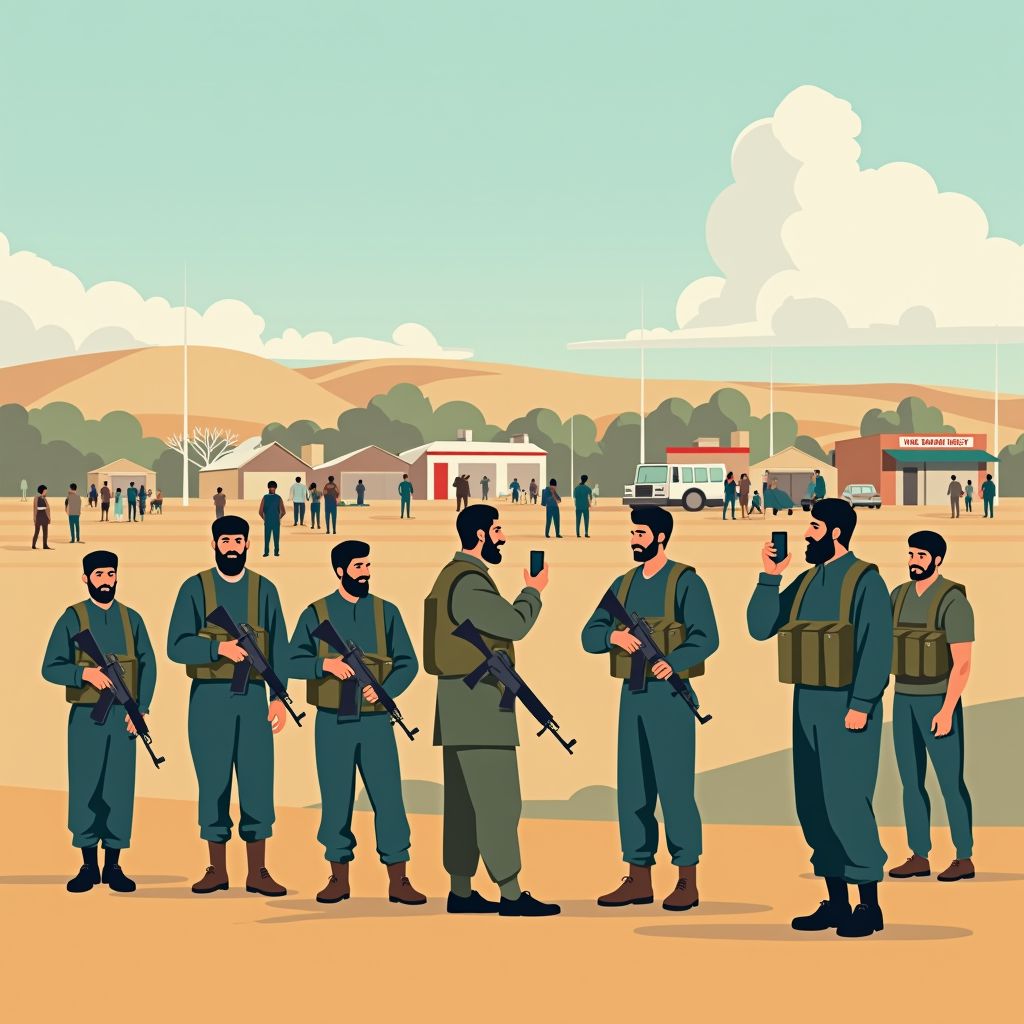
Lebanese militant group Hezbollah has initiated ‘Operation Eaten Harvest’ targeting Israeli positions, marking a significant escalation in southern Lebanon tensions. The operation comes as Lebanon’s government attempts to disarm fifteen factions, including Hezbollah, which rejected disarmament plans in September 2025. Israel has responded with intensive bombing campaigns across southern Lebanon, forcing over 150,000 residents to evacuate from areas south of the Litani River and Beirut’s southern suburbs. Military analysts reveal that ‘Eaten Harvest’ is actually an old operational name previously used by Israel, highlighting the ironic adoption of Israeli military terminology. The escalation occurs against a backdrop of broader regional conflict, with Iran launching approximately 100 missiles at Israeli targets in recent hours, further destabilising Middle Eastern security dynamics.
Strategic Context and Regional Implications
The timing of Hezbollah’s ‘Operation Eaten Harvest’ announcement on Wednesday, 11 March 2026, reflects deeper strategic calculations amid unprecedented regional volatility [1][2][3]. Military analyst Lieutenant General Osama Kabir, adviser at the Command and Staff College, explained that the operation’s name represents an ironic appropriation of Israeli military terminology, noting that ‘Eaten Harvest’ is an old designation previously used by Israeli forces [1]. This symbolic reversal underscores Hezbollah’s psychological warfare tactics whilst the group maintains strategic weapon stockpiles specifically designed for retaliatory strikes against Israeli positions [1]. The operation unfolds against the backdrop of Iran’s recent missile barrage, with Tehran launching approximately 100 rockets that struck Israeli territory in recent hours, demonstrating the interconnected nature of regional proxy conflicts [1].
Displacement Crisis and Humanitarian Impact
Israeli military operations have triggered a massive displacement crisis, with more than 150,000 residents fleeing southern Lebanon due to intensive aerial bombardment campaigns [1]. The Israeli army issued comprehensive evacuation warnings on 10 March 2026 to residents of areas south of the Litani River, Beirut’s southern suburbs, and several towns in eastern Lebanon, preceding violent attacks across Lebanese territory [2]. The humanitarian toll intensified dramatically as Israeli airstrikes created what military observers described as a ‘fiery belt’ around Beirut’s southern suburbs, with six Israeli strikes targeting the Dahieh area specifically [5]. Lebanon Debate correspondent reported fires breaking out in the Darwish-Marija vicinity of southern Beirut following the Israeli bombardment, marking what officials characterised as the most violent escalation since the current confrontation began [5].
Government Disarmament Efforts and Internal Tensions
Lebanon’s internal political dynamics have significantly complicated the security situation, with the government pursuing an ambitious disarmament programme targeting fifteen different factions operating within Lebanese territory [1]. The disarmament initiative, developed through a dynamic plan with specific timelines, faced immediate resistance from Hezbollah, which categorically rejected the government’s proposals in September 2025 [1]. Military analysts suggest that Israel has strategically exploited these internal Lebanese tensions to justify its extensive bombing campaigns across southern Lebanon, positioning its military operations as responses to the government’s inability to control armed factions [1]. The Lebanese government’s attempts to disarm Hezbollah have created a strategic opening that Israeli forces appear determined to exploit through sustained military pressure [1].
Broader Regional War Dynamics
The escalation occurs within a wider context of Iranian-American-Israeli warfare that has fundamentally altered Middle Eastern security calculations since late February 2026 [4]. Tehran’s Revolution Square witnessed massive public funerals for senior military and security leaders, including Ali Shamkhani, Secretary of the Supreme National Security Council, and other high-ranking officials killed in the initial strikes of the ongoing conflict that began on 28 February 2026 [4]. The targeting of Iranian leadership, including Supreme Leader Ali Khamenei and senior military commanders such as Mohammad Pakpour of the Revolutionary Guard Ground Forces and Defence Minister Aziz Nasirzadeh, represents an unprecedented escalation in regional warfare [4]. The involvement of Oman as a mediating party has been tragically compromised, with Iranian forces targeting the country despite its efforts to resolve the crisis, highlighting how the conflict has expanded beyond traditional battlegrounds to affect neutral regional actors [1].