

Kenyan Health Workers Learn to Build Children's Learning Toys from Household Scraps
Kalobeyei, 6 June 2026
In Kalobeyei, 83 community health workers are now equipped to turn everyday household materials into learning tools for children under three — bringing early childhood development directly into homes where shop-bought toys remain out of reach.
What Happened and When
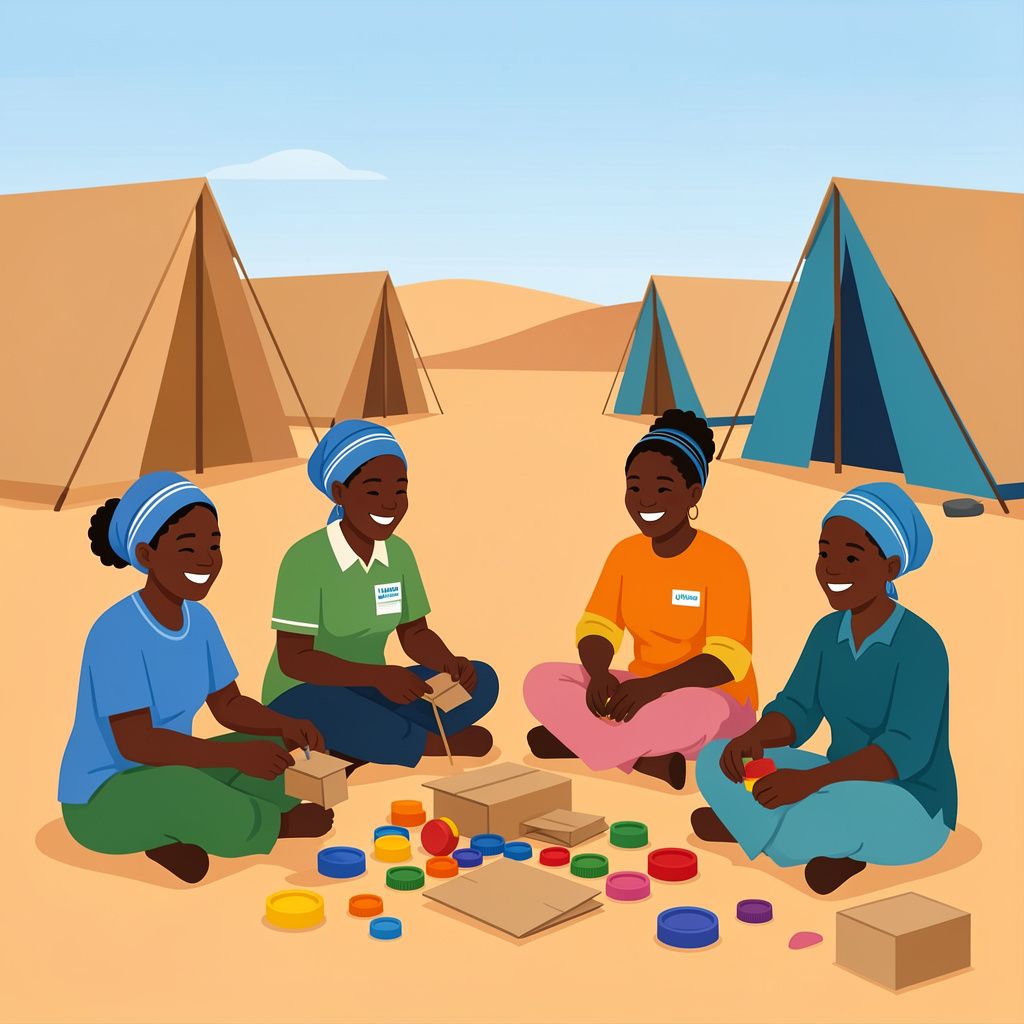
On 5 June 2026, a structured training session took place in Kakuma, bringing together at least 83 Community Health Promoters (CHPs) and sub-recipients of the Tucheze Tustawi project from Turkana West [1]. The participants included partners from two organisations — the Kalobeyei Initiative for Better Life and ACME organisation — and the focus of the day was entirely practical: how to design low-cost, home-based play and learning materials for children under three years of age [1]. The training was not a one-off event delivered in isolation. It is part of a wider collaboration between the County Government of Turkana and Amref Health Africa, building directly on earlier early childhood development work carried out under the internationally recognised Nurturing Care Framework [1].
Why This Matters for Families in Kalobeyei and Kakuma
Turkana is the second largest county in Kenya, covering 77,000 square kilometres, and sits in the north-western corner of the country [1]. Within this vast and often underserved region, families in settlements such as Kalobeyei and Kakuma face a very specific challenge: the cost of commercially produced toys and learning materials puts them entirely beyond reach for most caregivers. As CHP Pauline Elote from Nadapal Unit put it plainly: ‘Most caregivers cannot afford toys from shops, but with these materials, children can now learn to identify colours, shapes, fruits, and animals long before school’ [1]. The gap this creates in early childhood stimulation is not trivial. Cognitive and social development in the earliest years of life depends heavily on structured play and interaction [GPT], and without access to appropriate materials, many children in camp settings miss out on foundational experiences that shape learning readiness.
How the Training Works — and What CHPs Are Learning
The training takes a firmly hands-on approach. Participants learned to create shapes, colour them using shredded paper, and construct simple play items from materials found in everyday households [1]. Lucas Emei, a CHP from Kalobeyei Unit, described the experience directly: ‘Today, we learned how to create shapes and colour them using shredded paper. The trainers are also very friendly. It really brings the children joy whenever they see us, as they run curious to learn something new. We have seen positive changes, including improved hygiene’ [1]. The guiding philosophy behind the programme is that CHPs are already a trusted and highly trained presence within their communities. Lead Trainer Martina Aoko Adega explained the reasoning: ‘We need to leverage existing community structures as a ready resource, especially the CHPs who have already been highly trained and are implementing the Tucheze Tustawi knowledge. Every time they come across expectant mothers or families with young children, it is an opportunity to educate them’ [1]. Lucas Taaban, a CHP from Morungole, added that the guidance given to caregivers is age-specific: ‘We guide caregivers on how to use different play items for different age groups so they can easily replicate them at home’ [1].
The Cascade Model: How Knowledge Reaches Individual Households
The trained group of 83 CHPs will not simply apply their new skills in isolation. The programme uses what is known as a cascade approach — meaning that each trained CHP is expected to pass on their knowledge to other CHPs and, critically, to caregivers and parents at household level [1]. This multiplier model is designed to extend the reach of the training far beyond the 83 individuals who attended the June 2026 session, ultimately supporting early stimulation practices and improving the tracking of psychosocial and social-emotional learning interventions across the settlement [1]. Reinhard Anzeze, Technical Officer for Child Health at Amref Tucheze Tustawi, summarised the broader ambition: ‘By empowering CHPs to turn simple household materials into play and learning tools, we are not only supporting children’s development but also strengthening families to become active participants in nurturing care’ [1]. The programme also carries an explicit message about shared parenting responsibility. Samuel Longes, a CHP from Nadapal 1 Unit, was direct on this point: ‘Parenting is a shared responsibility. Men need to be actively involved and participate in nurturing their children’ [1]. Community Health Assistants (CHAs) working alongside CHPs in units including Nadapal and Morongole are already seeing behavioural shifts among caregivers. Rodah Ebonan, a CHA from Morongole 1 Unit, observed: ‘Caregivers now understand the importance of play-based learning and are increasingly integrating it into daily routines’ [1]. Beyond developmental outcomes, the Medical Officer of Health in Turkana West, John Ngasike, noted that the initiative has also improved the early identification of developmental delays, enabling timely referrals to health facilities — a health system benefit that extends well beyond the learning materials themselves [1].
How to Access This Support: A Practical Guide for Caregivers
For caregivers living in Kalobeyei, Kakuma, or surrounding areas of Turkana West, accessing this support does not require visiting a clinic or filling in complex forms. The CHPs trained under the Tucheze Tustawi project operate at community and household level, meaning they come directly to families [1]. If you are an expectant mother or a parent or caregiver of a child under three years of age, your local CHP is the first point of contact [1]. There are no fees associated with this programme [alert! ‘The source does not explicitly state whether there are fees; this is inferred from the low-cost and household-level nature of the programme’]. The materials used are everyday household items, so no special purchases are required. CHPs from units including Kalobeyei, Nadapal, Nadapal 1, and Morongole are actively participating in the programme as of June 2026 [1]. If you are unsure who your local CHP is, the Turkana West health office or the nearest community health facility should be able to direct you to the relevant contact [alert! ‘The source does not specify a direct telephone number or registration process for caregivers; this guidance is based on the structure of the CHP system as described in the source’].