

Champions League Matches Unite Refugee Communities Across East African Camps
Kakuma, 10 March 2026
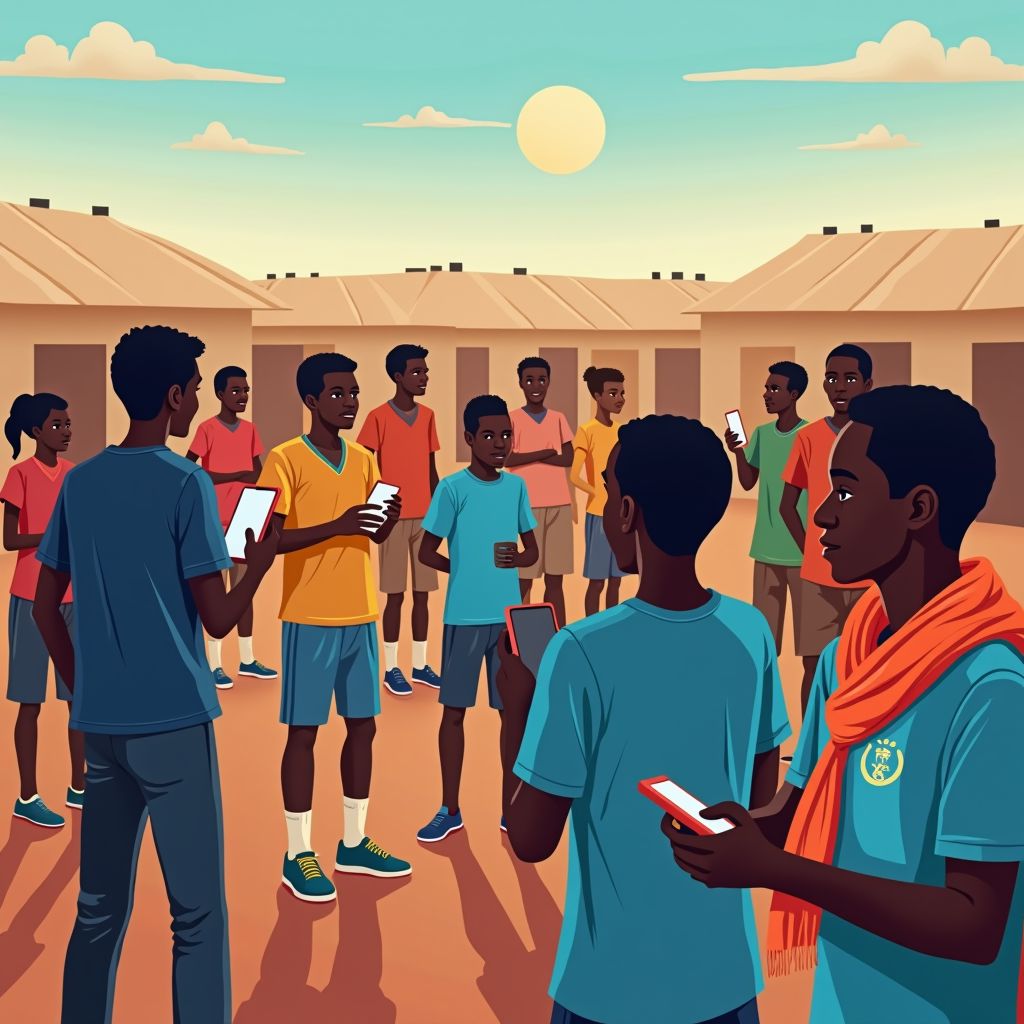
Football fans from South Sudan, Somalia, Ethiopia and Congo gather in Kakuma and Kalobeyei refugee camps to watch major Champions League fixtures including Real Madrid versus Manchester City and Newcastle against Barcelona. These high-profile European matches provide vital social connection and temporary escape from daily hardships for displaced communities who support teams based on regional star players.
Tuesday Night Football Brings Communities Together
As Tuesday evening descended across the refugee settlements, makeshift viewing areas transformed into vibrant community hubs. The Champions League Round of 16 first leg matches scheduled for 10 March 2026 created a focal point for social gathering, with Galatasaray hosting Liverpool at 18:45 CET, followed by Newcastle United welcoming Barcelona to St James’ Park [1][2]. These fixtures represent more than entertainment for displaced populations who have found solace in European football despite being thousands of kilometres from the stadiums where their heroes compete.
High-Stakes Encounters Captivate Refugee Audiences
The evening’s marquee fixture between Newcastle United and Barcelona particularly resonated with camp residents, as Barcelona’s impressive Champions League campaign has seen them score 22 goals across eight matches whilst maintaining an 88.88% passing accuracy [3]. Meanwhile, anticipation builds for Wednesday’s clash between Real Madrid and Manchester City at the Bernabeu on 12 March 2026, despite Real Madrid’s recent injury concerns with Kylian Mbappe and Jude Bellingham expected to miss the encounter [1]. The Spanish giants’ recent 2-1 victory over Celta Vigo on 7 March 2026, sealed by Federico Valverde’s 95th-minute winner, has provided optimism among their supporters in the camps [1].
Regional Connections Drive Team Loyalties
Football allegiances within the refugee communities often reflect deeper cultural and geographical connections [GPT]. Many residents from East African nations gravitate towards teams featuring players with similar backgrounds or those who have gained prominence through international competitions [GPT]. The Champions League’s global reach, facilitated by broadcasters and social media platforms, ensures that even remote refugee settlements maintain connections to European football’s premier competition [GPT]. Local radio stations, including Radio 47 Kenya, have embraced this passion by hosting prediction segments where community members share their forecasts for the tournament’s progression [4].
Tournament Format Enhances Viewing Experience
The current Champions League structure, which commenced its knockout phase on 17 February 2026 following a league phase that concluded on 28 January, has provided consistent entertainment throughout the early months of the year [2]. The tournament’s progression towards the final scheduled for 30 May in Budapest creates a sustained narrative that refugee communities can follow across several months [2]. This extended timeline allows for deeper engagement with storylines and player developments, transforming individual matches into chapters of a broader sporting saga that transcends the immediate challenges faced by displaced populations [GPT].