

Ethiopia Bolsters Air Superiority with Advanced Russian Warplanes Amid Rising Regional Tensions
Addis Ababa, 29 October 2026
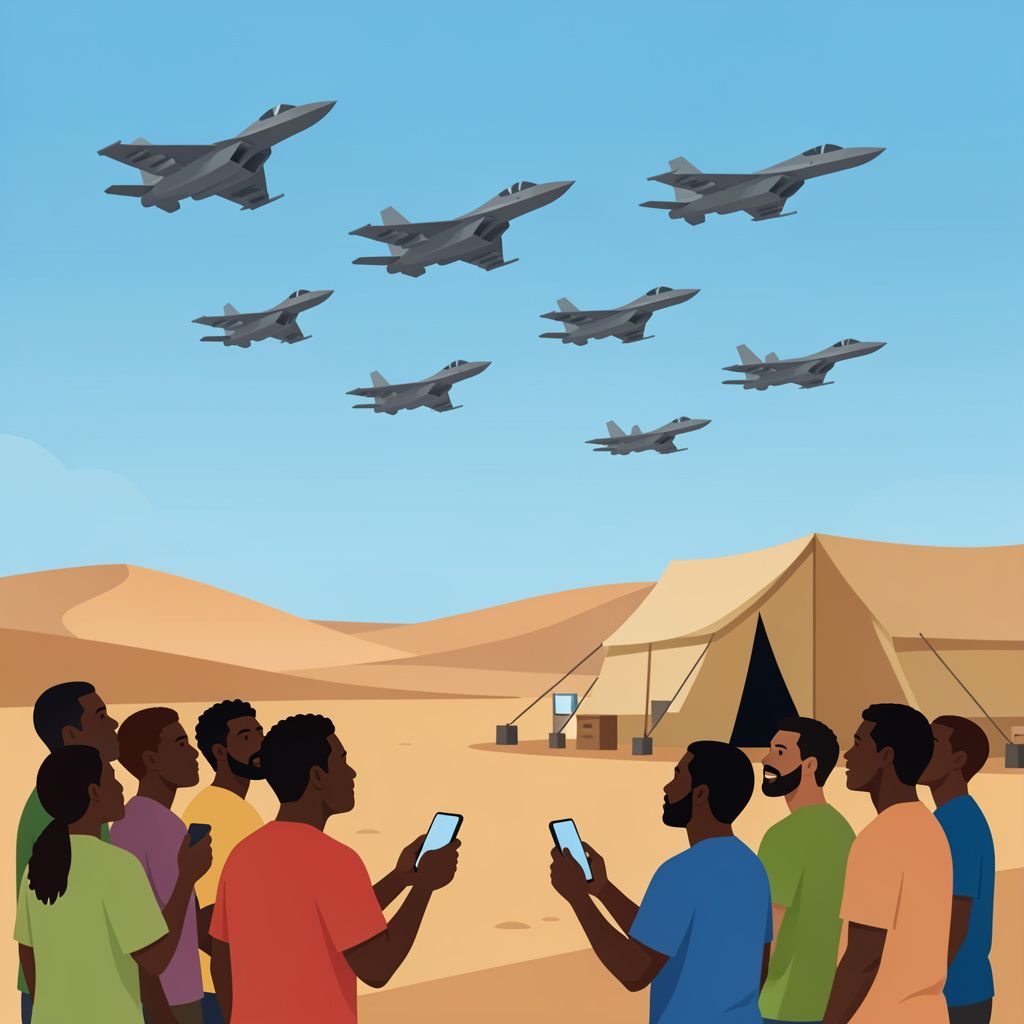
Ethiopia has become the first sub-Saharan nation to receive advanced Russian Su-35 fighter aircraft, fundamentally shifting regional military dynamics as federal tensions escalate and bilateral trade with Moscow surges.
Strategic Modernisation and the Moscow Corridor
The delivery of twelve Russian Su-35 combat aircraft on 25 October 2026 establishes Ethiopia as the first sub-Saharan African country to field this advanced fourth-generation aviation platform [2][7]. Announced by Prime Minister Abiy Ahmed during the Russia-Africa Summit in Moscow on 27 October 2026, the bilateral arrangement also encompasses the planned future procurement of four S-400 surface-to-air missile batteries [1]. These acquisitions build upon a formal bilateral defence agreement signed in 2021 designed to overhaul technical military capabilities [2], alongside a historical partnership rooted in Cold War ties between Moscow and Addis Ababa [1]. Prime Minister Abiy characterised the acquisition as a vital strategic milestone, emphasising that robust defensive preparedness remains essential for national survival in an increasingly volatile region [2].
Expanding Commercial Links and Tactical Capabilities
The transfer reflects expanding commercial and geopolitical ties between Moscow and Addis Ababa. Bilateral trade exceeded $1.3bn across the January to September period of 2026, more than doubling the aggregate turnover recorded throughout the entire year of 2025 [1]. Military exports remain a key driver of Russian engagement across Africa, where Moscow accounted for 15 percent of all major arms imports between 2021 and 2025—ranking closely behind China at 17 percent and the United States at 19 percent [1]. By incorporating the Su-35, which boasts multirole combat profiles and an active radar detection reach extending up to 200 km [2][7], the Ethiopian Air Force enhances its existing inventory of fourth-generation Su-30 jets and unmanned aerial vehicles procured from Turkey and China [2].
Escalating Tigray Clashes and Border Instability
This military upgrade coincides with renewed internal friction and external security dilemmas. Northern Ethiopia witnessed a severe unraveling of the November 2022 Pretoria cessation of hostilities after hostilities between the federal army and the Tigray People’s Liberation Front resumed on 28 September 2026 [1][2]. Federal units entered the regional capital of Mekelle in early October 2026 following the withdrawal of regional fighters, prompting the establishment of a six-month caretaker administration [1]. Simultaneously, geopolitical rhetoric has intensified around Ethiopia’s bid for sovereign sea access—an ambition that neighbouring Eritrea perceives as a direct threat to its territorial boundaries [2]. Analysts note that while the sophisticated aircraft reinforce perimeter security over critical installations like the Grand Ethiopian Renaissance Dam, air superiority doctrines face distinct operational vulnerabilities against distributed low-cost drone swarms [1][2].
Humanitarian Reverberations in Turkana
The resurgence of regional warfare and border friction severely threatens safe cross-border passage, directly affecting displaced communities across the wider Horn of Africa [GPT]. For Ethiopian refugees sheltering across the border in north-western Kenya’s Turkana County—principally within the Kakuma refugee camp and the Kalobeyei integrated settlement—escalating hostilities diminish prospects for voluntary, dignified repatriation to northern communities [GPT]. Host and refugee populations in Turkana already face profound economic pressure and resource scarcity [GPT], and sustained conflict risks precipitating further refugee flows into the region, exacerbating communal strain and humanitarian supply logistics [GPT].
Bronnen
- www.aljazeera.com
- www.bbc.com
- www.facebook.com
- www.facebook.com
- www.instagram.com
- www.instagram.com
- www.amn.gov.et
- www.tiktok.com