

Kenya’s Ambitious Refugee Integration Faces Severe Funding Shortfalls in Turkana
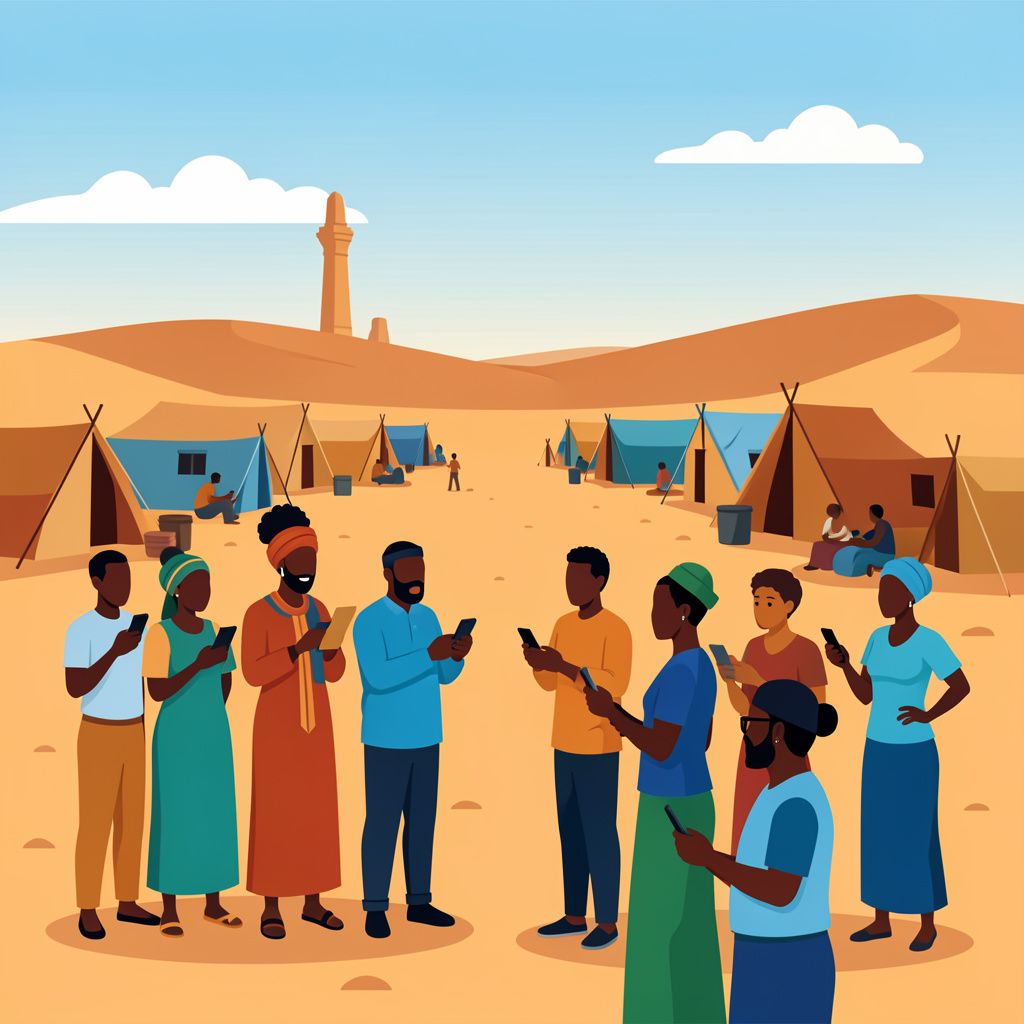
Kakuma, 3 November 2026
Despite progressive laws, a 77 per cent budget deficit leaves over 800,000 refugees on critical ration cuts, exposing a stark divide between national policy and reality.
Policy Ambitions Clash With Capital Deficits
Kenya’s ambitious shift away from decades of camp encampment toward socio-economic inclusion faces structural fiscal hurdles [1][2][3]. In March 2025, the Government of Kenya launched the 11-year Shirika Plan to integrate displaced populations into the national fabric by transitioning major complexes—such as Kakuma and Dadaab—into formal municipalities [2][6]. Supported by the legal architecture of the Refugees Act 2021 and the Refugees (General) Regulations 2024, the plan outlines an extensive development vision requiring US$943 million [1][2][3]. However, by October 2026, international financing had secured only 23 per cent of that target [2]. The resulting unbacked gap leaves a funding shortfall of 77 per cent, crippling field operations and leaving more than 800,000 refugees across the country subsisting on emergency rations that supply merely 28 per cent of standard nutritional requirements [2].
Structural Gaps in Turkana’s Essential Infrastructure
The operational disconnect between legislative frameworks and field conditions is starkly visible across Turkana County’s Kakuma Camp and Kalobeyei Integrated Settlement [1][3]. According to a Legislative and Policy Indexing study conducted by the Refugee Consortium of Kenya (RCK) through the Danida Inclusive Refugee Response Programme, core municipal services have deteriorated rather than expanded [1][3]. Daily water pumping schedules have dropped from 18 hours to 12 hours—a contraction of 33.333 per cent—driven by donor funding reductions, fuel limitations, and infrastructure vandalism [1][3]. In local settlements, water allocations are strained to the point that a family of seven often receives three 20-litre jerricans intended to cover 72 hours, forcing multiple households to resort to unmetered, informal cash payments to independent operators to secure daily essentials [1][3].
Healthcare and Educational Institutions Under Strain
Social service delivery across Kakuma Municipality—which hosts a combined populace of roughly 530,000 individuals, including over 310,000 registered refugees and asylum seekers representing 24 distinct nationalities—remains equally constrained [3][6]. Just eight functional health centres cater to the area’s 310,000 refugees and host neighbours, with standard consultations restricted to between 08:00 and 15:00 daily [1][3]. The operational doctor-to-patient ratio stands at 1:130, which deteriorates to 1:150 during endemic seasonal malaria outbreaks [1][3]. Although Turkana County has advanced into phase 3 of Taifa Care under the national Social Health Authority (SHA), universal coverage remains elusive; Regulation 19 of the Social Health Insurance General Regulations fails to explicitly direct indigent premium coverage for non-citizens, leaving thousands uninsured amid widespread poverty and lack of national identification documentation [1][3].
Institutional Inertia and Municipal Deadlocks
Educational access reveals a similar systemic strain across the 55 designated learning centres serving 73,901 enrolled pupils [1][3]. Out of the 770 active teachers staffed across the settlements, 673 are unregistered refugee instructors who operate outside the direct oversight and remuneration frameworks of the Teachers Service Commission (TSC) [1][3]. Classrooms operate with general teacher-to-student ratios ranging from 1:100 to 1:150, but severe capacity shortfalls in Kalobeyei primary schools push that figure up to 1:300 [1][3]. While institutional blueprints like the Kalobeyei Integrated Socio-Economic Development Plan (KISEDP)—incepted in 2015 alongside UN-Habitat and UNHCR—attempted to champion shared socioeconomic investments, chronic shortfalls, including a US$20 million operating deficit recorded in 2025, have hampered implementation [2][6].
Reforming the Bureaucratic Framework for Tangible Integration
Closing the gap between statutory promises and lived reality requires national regulators to harmonise regional administrative policies [1][3]. Although the Refugees Act 2021 aligns Kenya’s statutory baseline with the 1951 Refugee Convention and 1969 OAU Convention, practical mobility remains curtailed by an active movement pass system, unfinalised land tenure frameworks, and protracted administrative delays in regularising work permits [2]. The international footprint continues to adapt through technical support; for instance, UNHCR launched recruitment for an 18-month UN Volunteer WASH Specialist position in Kakuma, scheduled to commence on 15 November 2026, to assist the transition of municipal water assets to utilities such as KALAWASCO [6]. Resolving Turkana’s socio-economic bottleneck, however, will ultimately depend on publishing outstanding administrative statutory regulations and guaranteeing transparent, multi-year funding pipelines [2][3].
Bronnen
- www.standardmedia.co.ke
- rli.blogs.sas.ac.uk
- www.the-star.co.ke
- www.facebook.com
- www.facebook.com
- unjobs.org
- www.facebook.com
- www.facebook.com