

African Union Celebrates Ethiopia's Victory That Defeated Colonial Powers 130 Years Ago
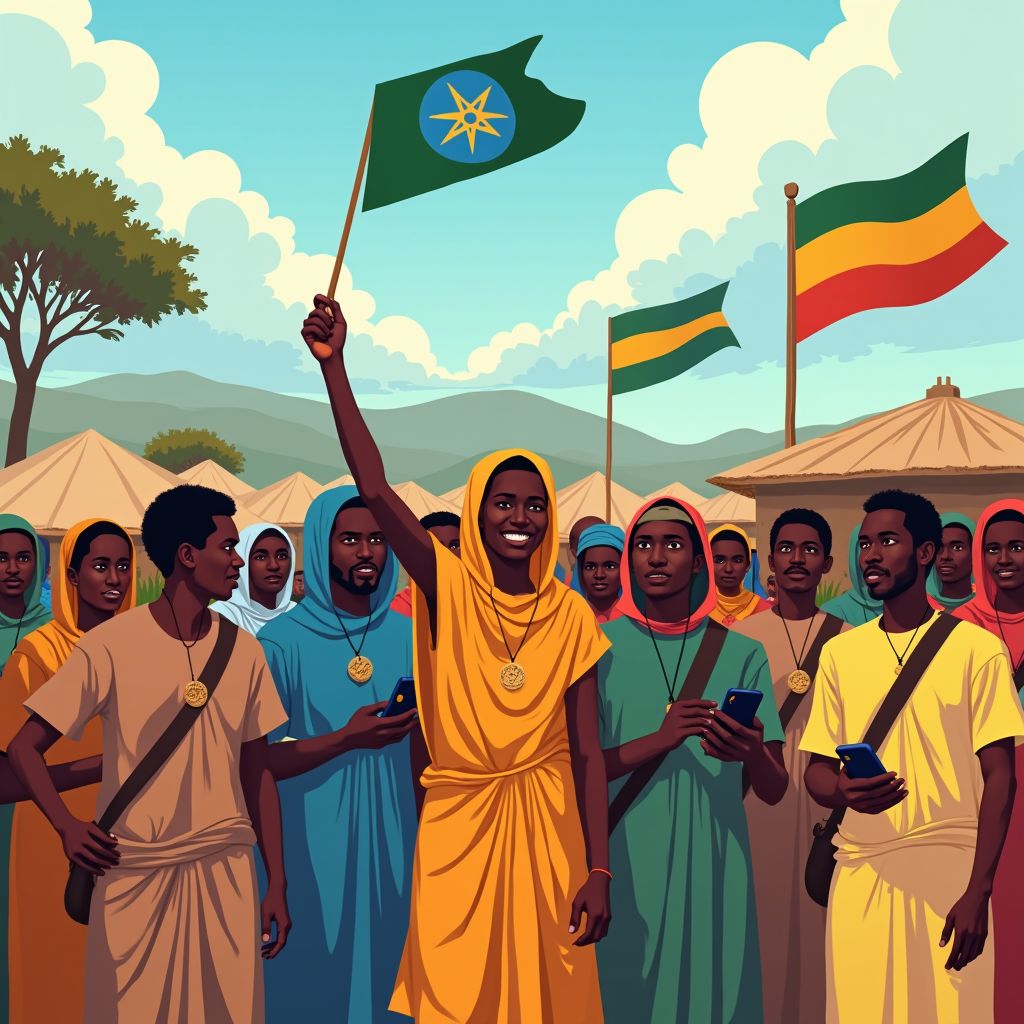
Addis Ababa, 2 March 2026
The African Union officially commemorated Adwa Day on 2nd March, marking Ethiopia’s stunning 1896 military victory over Italian colonial forces. This triumph made Ethiopia one of only two African nations never fully colonised, inspiring generations of anti-colonial movements across the continent. For Ethiopian refugees currently living in Kenya’s Kakuma camp, this celebration holds profound meaning as they honour their homeland’s unique legacy of independence whilst facing their own displacement challenges today.
AU Commission Hails Historic Victory’s Enduring Legacy
Mahmoud Ali Youssouf, Chairperson of the African Union Commission, described the Victory of Adwa as a ‘beacon of freedom’ during today’s commemorations [1]. The central ceremony took place at Emperor Menelik II Square and the Adwa Victory Memorial in Addis Ababa, presided over by President Taye Atske Selassie [1]. High-ranking officials including Field Marshal Birhanu Jula, Defence Minister Aisha Mohammed, and Addis Ababa Mayor Adanech Abebe attended the proceedings [1]. The Prime Minister addressed the nation, defining the victory as more than a military triumph against Italian colonial forces, describing it as a testament to Ethiopia’s national interest, freedom and sovereignty whilst also representing a victory over internal betrayal [1].
Contemporary Significance for Displaced Ethiopian Communities
For the thousands of Ethiopian refugees residing in Kenya’s Kakuma camp, Adwa Day represents a complex juxtaposition of national pride and current displacement realities. Kakuma Refugee Camp, established in 1992 in Kenya’s Turkana District, serves refugees from multiple nations including Ethiopia, Somalia, Burundi, Democratic Republic of Congo, Eritrea, Uganda, and Rwanda [2]. The camp’s population reached close to 180,000 refugees as of 2008, with Kakuma hosting 21% of Kenya’s total refugee population in 2007 [2]. Ethiopian refugees in the camp face significant restrictions on movement, requiring Movement Passes from both UNHCR and the Kenyan Government to travel outside the camp area, whilst being prohibited from seeking education or employment beyond its boundaries [2].
Economic Constraints and Dependency Challenges
The economic realities for Ethiopian refugees in Kakuma starkly contrast with their homeland’s historic independence. Refugees in the camp are largely unable to support themselves due to legal restrictions and environmental constraints, with the semi-arid climate proving unsuitable for agriculture [2]. As refugee analyst Arafat Jamal observed in 2000, ‘Anyone confined to a place like Kakuma is rendered automatically dependent on some form of hand-out’ [2]. Only a small fraction of the refugee population receives incentive payments for working with NGOs, leaving most entirely reliant on humanitarian assistance [2]. This dependency creates what Jamal described as life akin to ‘prison and exile’ or ‘more or less a kind of hostage life’ [2].
Reinforcing Pan-African Unity Through Historical Memory
The African Union’s emphasis on Adwa Day aligns with its broader mission to promote Africa’s growth and economic development through increased cooperation and integration of African states [3]. The AU’s 2026 theme focuses on ‘Assuring Sustainable Water Availability and Safe Sanitation Systems to Achieve the Goals of Agenda 2063’ [3], demonstrating how historical victories like Adwa continue to inform contemporary development strategies. Residents in Addis Ababa joined elderly patriots to recount stories of the battle, reinforcing Ethiopia’s role as a symbol of anti-colonial struggle [1]. This commemoration serves not only as a celebration of Ethiopian sovereignty but as inspiration for current African unity initiatives, particularly relevant as the continent continues addressing displacement crises affecting millions across its borders.