

East Africa Faces Stadium Crisis as AFCON 2027 Countdown Intensifies
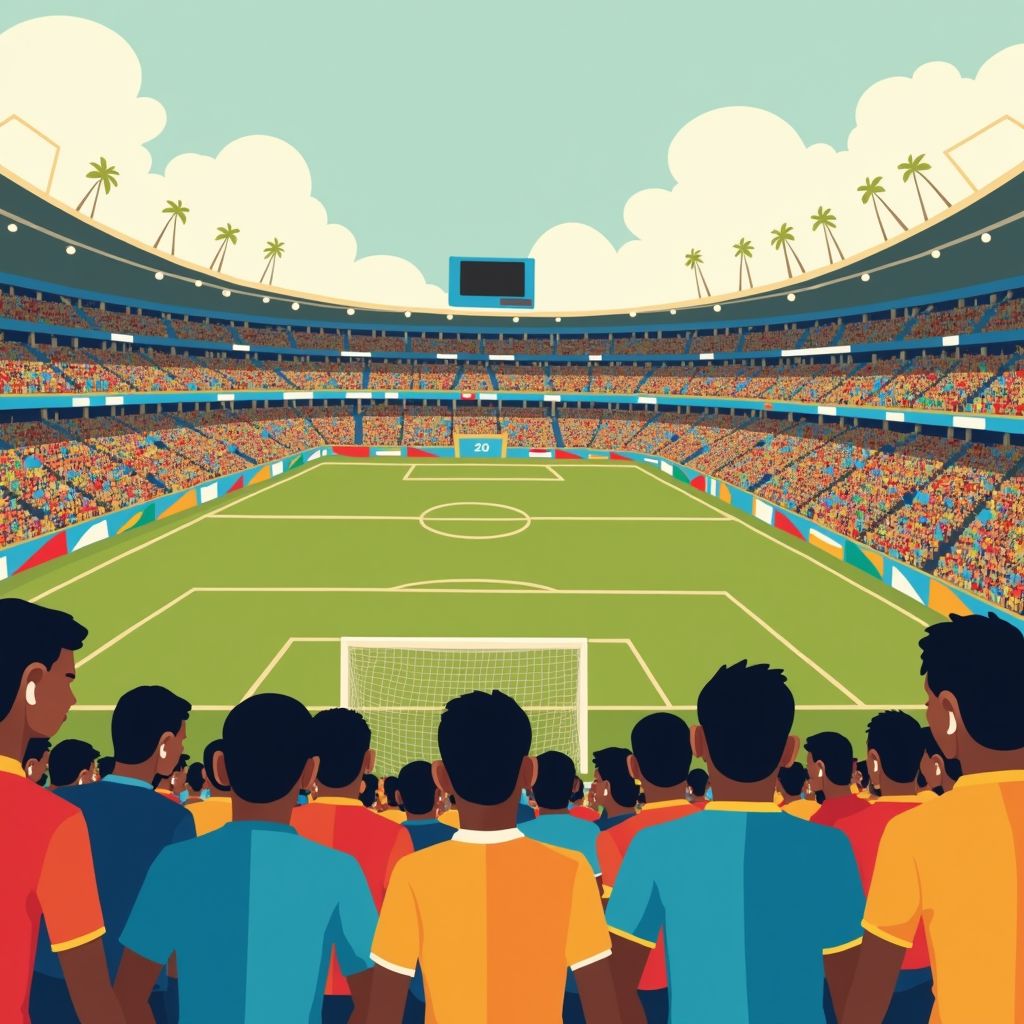
Nairobi, 2 March 2026
With just 16 months until the historic three-nation Africa Cup of Nations tournament, East Africa confronts mounting infrastructure challenges that threaten the prestigious event’s success. Kenya’s two primary football venues have closed for renovations, forcing domestic teams to play matches in adjacent counties and smaller grounds. Recent CAF inspections across Tanzania, Kenya, and Uganda revealed concerning gaps in stadium readiness, whilst millions of shillings invested in new facilities have yielded substandard results. Tanzania has approved a £56.6 billion budget specifically for AFCON preparations, but time pressure is building as the region races against the clock to meet CAF’s world-class delivery standards for Africa’s premier football competition.
Kenya’s Stadium Closures Create Domestic Football Crisis
The closure of Kenya’s two flagship football venues has created unprecedented challenges for the country’s domestic league. The Moi International Sports Centre in Kasarani and the Nyayo National Stadium have both shut down for renovations ahead of AFCON 2027, forcing the nation’s top-flight teams to seek alternative venues [1]. This has created a state of emergency for domestic games, with clubs now travelling to facilities in adjacent counties such as Wang’uru in Kirinyaga and SportPesa Arena in Murang’a [1]. The situation is particularly acute in Nairobi, which hosts 12 of the 18 top-flight teams, leading to smaller venues like Vapour Grounds in Ngong being pressed into service for top-tier matches [1]. Meanwhile, other potential venues face their own limitations, with strict rules limiting the availability of Police Sacco Stadium and Ulinzi Sports Complex, directly affecting prominent teams like AFC Leopards and Gor Mahia [1].
CAF Officials Conduct Critical Infrastructure Inspections
The Confederation of African Football (CAF) has intensified its oversight of AFCON 2027 preparations, with recent inspection visits highlighting the urgency of the situation. CAF’s Executive Committee, led by President Dr Patrice Motsepe, recently gathered in Dar es Salaam for a countdown inspection [2]. Technical teams have been conducting thorough assessments of stadiums and facilities across all three host nations, including venues in Dar es Salaam, Arusha, Zanzibar, Nairobi, Kampala, and Hoima [2]. In Kenya specifically, CAF pitch consultant Aaron Mark Cross conducted a two-day inspection of venues in early February 2026 [1]. Despite these ongoing assessments, CAF has maintained that reports suggesting potential delays to the tournament are ‘totally unfounded’ [3]. Dr Motsepe expressed confidence in the project’s success, stating: ‘The Afcon next year in Kenya, Tanzania and Uganda is going to be enormously successful’ [3]. However, CAF has made clear that AFCON 2027 must meet ‘world-class delivery standards’ [2], adding pressure to the host nations’ preparations.
Substandard Stadium Construction Threatens Regional Readiness
Across the region, ambitious stadium construction projects have encountered significant quality control issues, raising concerns about readiness for the tournament. In Kenya, millions of shillings have been invested in poorly executed stadium constructions, with several high-profile projects facing serious challenges [1]. The Bukhungu Stadium in Kakamega remains under construction despite consuming substantial funding, whilst the Ithookwe Stadium in Kitui County presents a particularly telling example of these issues [1]. Despite hosting Kenya’s Mashujaa Day celebrations in 2025 following a four-month construction period, the stadium remains incomplete four months after the historic event, with one observer noting it appears ‘deserted’ [1]. Similar concerns plague the Masinde Muliro Stadium in Bungoma and a project in Wajir, all of which are at risk of delivering substandard facilities [1]. The situation has highlighted Kenya’s ongoing struggle with CAF certification, as the country’s national stadiums currently lack the necessary approvals [1].
Tanzania Commits Massive Budget to Tournament Success
In a demonstration of serious commitment to the tournament, Tanzania’s Football Federation (TFF) has approved a substantial budget to ensure successful hosting. At their 20th Annual General Meeting in Kahama, Shinyanga region, TFF approved a budget of 56.6 billion Tanzanian shillings for the 2026 financial year [4]. This represents a modest increase from the previous year’s allocation of 56.3 billion Tanzanian shillings, with the increment of 0.3 billion shillings reflecting the heightened focus on AFCON preparations [4]. Athuman Nyamlani, Chairman of the Finance and Planning Committee and First Vice President of TFF, explained that revenue sources would include grants from FIFA and CAF, alongside local sources such as entrance fees, broadcasting rights, and sponsorships [4]. The federation estimates spending 56.4 billion Tanzanian shillings whilst expecting a surplus of 204 million Tanzanian shillings [4]. TFF President Wallace Karia has emphasised that cooperation with the government has accelerated the construction of modern infrastructure in the regions of Arusha and Dodoma, viewing the AFCON preparations as a crucial opportunity to promote Tanzania on the continental stage [4].
Political Considerations Add Complexity to Hosting Arrangements
The tournament timeline has introduced unexpected political complications that could influence the hosting arrangements. Nicholas Musonye, chairman of Kenya’s local organising committee, has suggested that postponing AFCON until 2028 ‘would be good for Kenya’ because the country will be preparing for a general election in August 2027 [3]. This political calendar concern adds another layer of complexity to an already challenging preparation period. Despite these concerns, the tournament’s schedule remains fixed for June and July 2027, marking several significant milestones [2][3]. The 2027 edition will be the final AFCON held in an odd-numbered year before the competition shifts to a four-year cycle starting in 2028 [2][3]. Additionally, the tournament will mark AFCON’s return to the CECAFA region after more than half a century and will coincide with the competition’s 70th anniversary [2]. President William Ruto has remained actively involved in Kenya’s AFCON preparations, regularly showcasing progress at construction sites and stadium grounds, including the Talanta Stadium [2], demonstrating the high-level political commitment to the project’s success despite the electoral calendar challenges.