

Uganda Prepares for Museveni's Presidential Inauguration Amid Last-Minute Construction Rush
Kampala, 12 May 2026
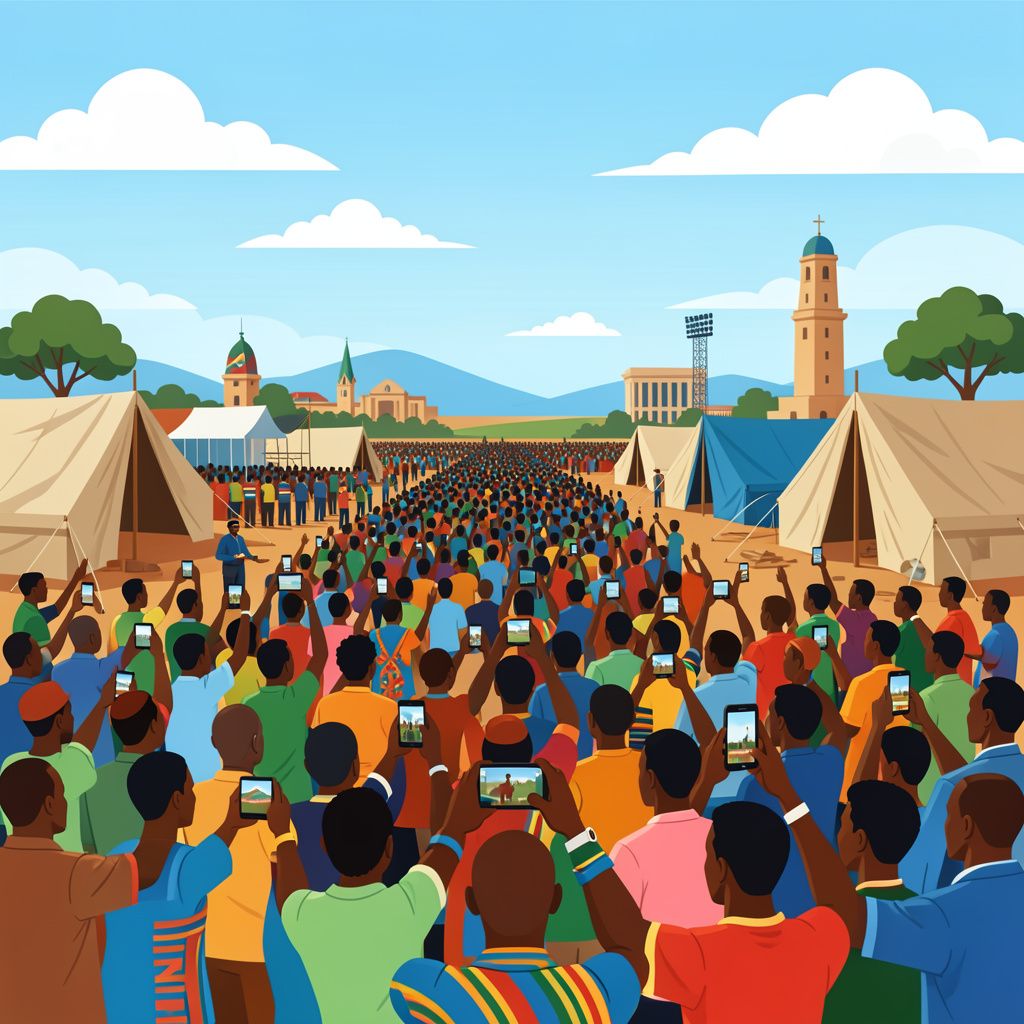
President Yoweri Museveni’s swearing-in ceremony at Kololo Ceremonial Grounds faced dramatic eleventh-hour preparations, with organisers scrambling to complete construction just hours before the event. Despite concerns about unfinished tents and seating arrangements, over 66,000 guests including nine heads of state gathered for Uganda’s significant political milestone on 12 May 2026.
Construction Crisis Hours Before Ceremony
The final coordination meeting on 10 May 2026 revealed critical infrastructure remained incomplete just hours before the scheduled ceremony [1]. Head of Public Service Lucy Nakyobe expressed urgent concerns about the timeline, stating: “The function is tomorrow morning. We are now at midday. So how many hours are left before daybreak vis-à-vis the activities that are not yet completed?” [1]. The main ceremonial tent was not fully erected, prompting Nakyobe to emphasise the urgency: “The seating and decoration teams need to put in a lot of effort. The tents are not yet up. Even the main tent for the function is not yet ready” [1]. Construction teams were given a strict deadline of 17:30 on 10 May 2026 to complete all structural works [1].
Massive Attendance Creates Logistical Challenges
The ceremony attracted an unprecedented turnout, with organisers confirming over 66,000 invited and uninvited guests [2][3]. The massive attendance included at least nine heads of state who had confirmed their participation, whilst a tenth remained pending confirmation by Monday afternoon [3]. The guest list comprised 7,000 VIPs, 6,000 delegates from NRM committees across 150 districts, and over 50,000 members of the public who did not require invitation cards [3]. Seating arrangements proved particularly challenging, with one tent accommodating 1,500 seats and another providing 2,000, creating a total capacity of 3500 seats [1]. The limited seating reflected lessons learned from 2021, when some legally invited guests had no seats at the inauguration ceremony [1].
Security and Access Controls Implemented
Security agencies, including the Uganda Police Force and Special Forces Command, implemented strict access control measures to manage the enormous crowd [1]. Major Denis Omara from Special Forces Command outlined the rigid timeline, warning attendees: “You must arrive by 7:00 a.m. Check-in will close by 8:30 a.m. After that, access will be restricted” [1]. The ceremony was scheduled to begin at 7:00 am on 12 May 2026, with President Museveni’s arrival expected at 10:40 am and the programme running until 14:30 [3]. Transport arrangements included over 40 coordinated shuttle movements to manage the flow of guests to Kololo Ceremonial Grounds [1].
Regional Significance for East African Stability
The presidential inauguration carries substantial implications for regional stability, particularly affecting refugee populations across East Africa [GPT]. Uganda serves as a major host country for refugees from neighbouring conflict zones, making the continuity of government crucial for maintaining border security and humanitarian operations [GPT]. Media Centre Executive Director Allan Kasujja emphasised the event’s broader significance, stating: “This is not just a national event. It is a regional and international event. The whole world will be watching” [1]. The ceremony proceeded on 12 May 2026 as planned, with over 4,000 guests including 11 heads of state gathered at Kololo Ceremonial Grounds to witness President Yoweri Kaguta Museveni swear in for another five-year term [4].