

One in Three New HIV Cases in Turkana County Is a Young Person — and Peer Educators Are Now Fighting Back
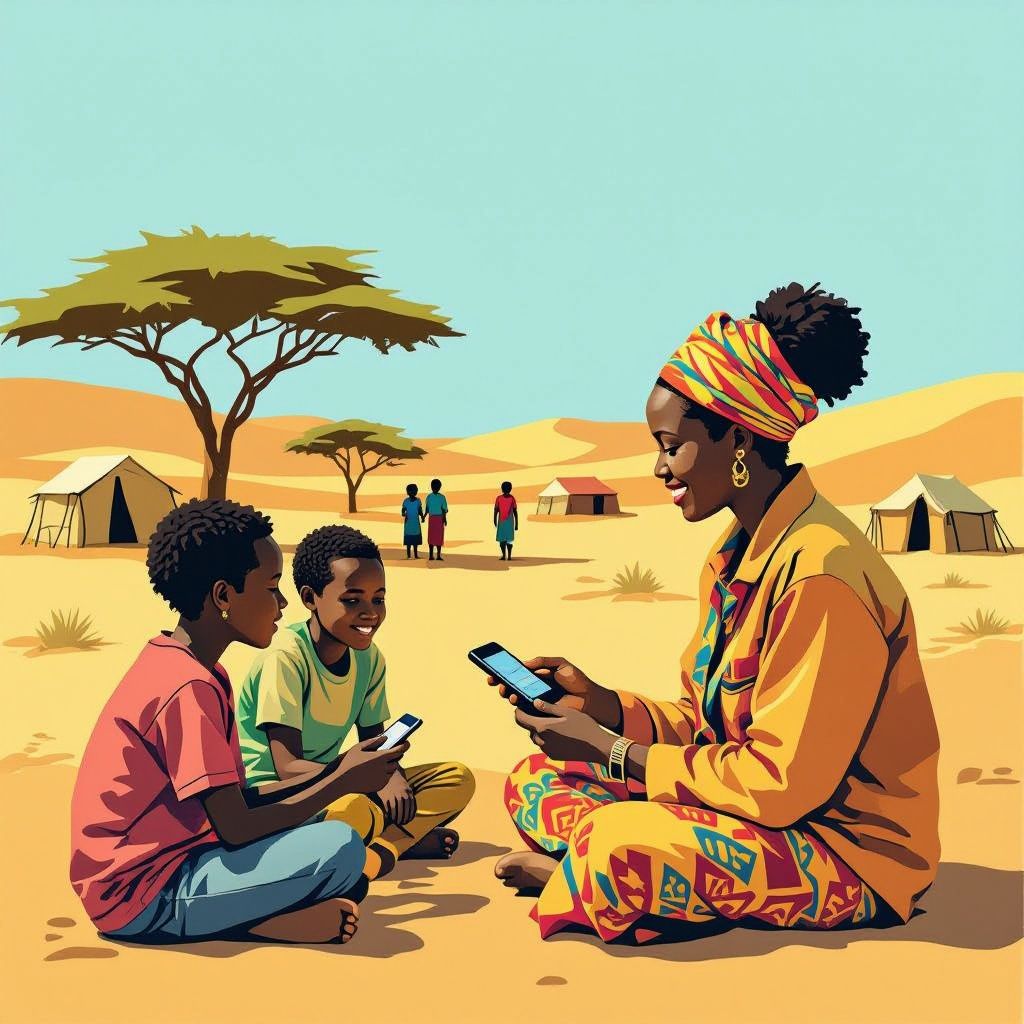
Lodwar, 13 June 2026
In Turkana County, young people aged 15 to 24 account for one in every three new HIV infections. Now, 180 trained peer educators are working in communities to change that.
A County Under Pressure
The numbers emerging from Turkana County paint a sobering picture. As of 2026, the county’s HIV prevalence stands at 2.19 per cent, with 16,925 people currently living with the virus — comprising 15,912 adults and 1,013 children [1]. In 2025, the county recorded 469 new HIV infections, and more than a third of those occurred among young people aged between 15 and 24 [1]. That means, statistically, roughly 156.333 of every new case diagnosed in the county that year involved a young person at the earliest stage of adult life. For a county already navigating significant challenges around poverty, food insecurity, and limited infrastructure, this concentration of new infections among youth represents a particularly urgent public health crisis [GPT].
A County Under Pressure
The three sub-counties most severely affected — Turkana South, Turkana Central, and Turkana West — have been identified by health authorities as HIV hotspots within the county [1]. Turkana West is of particular relevance because it is home to the Kakuma refugee camp and the Kalobeyei settlement, where refugees and host community members share health facilities, social spaces, and risk environments [GPT][alert! ‘The direct HIV prevalence figures specific to Kakuma and Kalobeyei are not provided in the source; the connection to Turkana West is drawn from general geographic knowledge’]. The pressures driving new infections are not abstract: health officials and peer educators on the ground have identified child marriages, teenage pregnancies, and substance abuse as the primary behavioural and social drivers of HIV exposure among young people in the county [1].
180 Peer Educators Deployed Across Three Sub-Counties
On 12 June 2026, Turkana County formally launched a peer-led HIV prevention initiative, with 180 girls and young mothers trained and deployed across Turkana South, Turkana Central, and Turkana West [1]. The programme is implemented by Africa Inland Church Health Ministries through the Global Fund HIV programme, and is facilitated by the National AIDS and STI Control Program, the Reproductive, Maternal, Newborn, Child and Adolescent Health Programme, and the Turkana County Department of Health Services [1]. The rationale behind using peer educators rather than conventional health outreach workers is straightforward, and was articulated clearly by Samwel Pulkol, Turkana County’s HIV/AIDS Programmes Coordinator, who stated on the day of the launch: “Peers speak the same language and truly understand each other’s circumstances” [1].
180 Peer Educators Deployed Across Three Sub-Counties
The scope of work assigned to these 180 educators is broad and deliberately community-rooted. They are tasked with operating in communities, schools, and churches to connect young people to HIV testing, treatment, and reproductive health services [1]. Florence Diyo, a Turkana South resident and one of the newly trained educators, described her mandate in direct terms: “I will also reach school-going children who are likely to be exposed to the virus and other STIs” [1]. Diyo also highlighted a critical element of the programme’s maternal health component, explaining that she has been trained specifically on how to support pregnant teenagers living with HIV — linking them to nearby public health facilities and ensuring they adhere to clinic appointments to prevent mother-to-child transmission [1]. The programme also tasks educators with leading village discussions, addressing alcohol and substance abuse, and championing voluntary medical male circumcision (VMMC) [1].
Cultural Barriers and the Challenge of VMMC
One of the more entrenched obstacles facing the programme involves VMMC uptake. Despite medical evidence supporting circumcision as a means of reducing HIV transmission risk — County Health Executive Joseph Epem stated plainly that “the foreskin facilitates the spread of HIV” and that circumcision “gives you some protection” — uptake at public hospitals in the county remains stubbornly low, at between 5 per cent and 10 per cent [1]. The primary reason is cultural: Turkana communities have long practised the traditional Asapan rite of passage, and many young men opt for this traditional ceremony over clinical circumcision at a public health facility [1]. Bridging the gap between cultural practice and public health guidance is one of the more delicate tasks peer educators will face as the programme rolls out in the coming months [1][GPT].
Substance Abuse, Illicit Brews, and a Community-Wide Response
Alongside VMMC promotion, the peer educators will be working to address the direct link between substance abuse and unsafe sexual behaviour. Prisca Rantale, one of the newly trained educators, put the connection bluntly: “Many young people engage in unprotected sex after abusing alcohol and drugs” [1]. In response, the programme’s plans extend beyond health messaging alone — peer educators intend to collaborate with security agencies to crack down on illicit brews circulating in communities, recognising that reducing access to unregulated alcohol is itself a public health intervention [1]. For residents of Kakuma and Kalobeyei, where both camp and host community populations share social environments, these community-level interventions are directly relevant [GPT][alert! ‘The source does not specify whether peer educator activities will extend into Kakuma camp or Kalobeyei settlement specifically; this relevance is inferred from geographic proximity within Turkana West sub-county’]. Residents are encouraged to access free HIV testing and counselling at IRC, MSF, and other camp health facilities, and to speak with health workers about prevention options including pre-exposure prophylaxis (PrEP) [GPT][alert! ‘The availability of PrEP and the specific facilities named are based on general knowledge of services in Kakuma; this is not confirmed by the cited source’].