

Dadaab Refugee Students Leave Camps for First Time to Attend Kenyan Secondary Schools
Dadaab, 11 March 2026
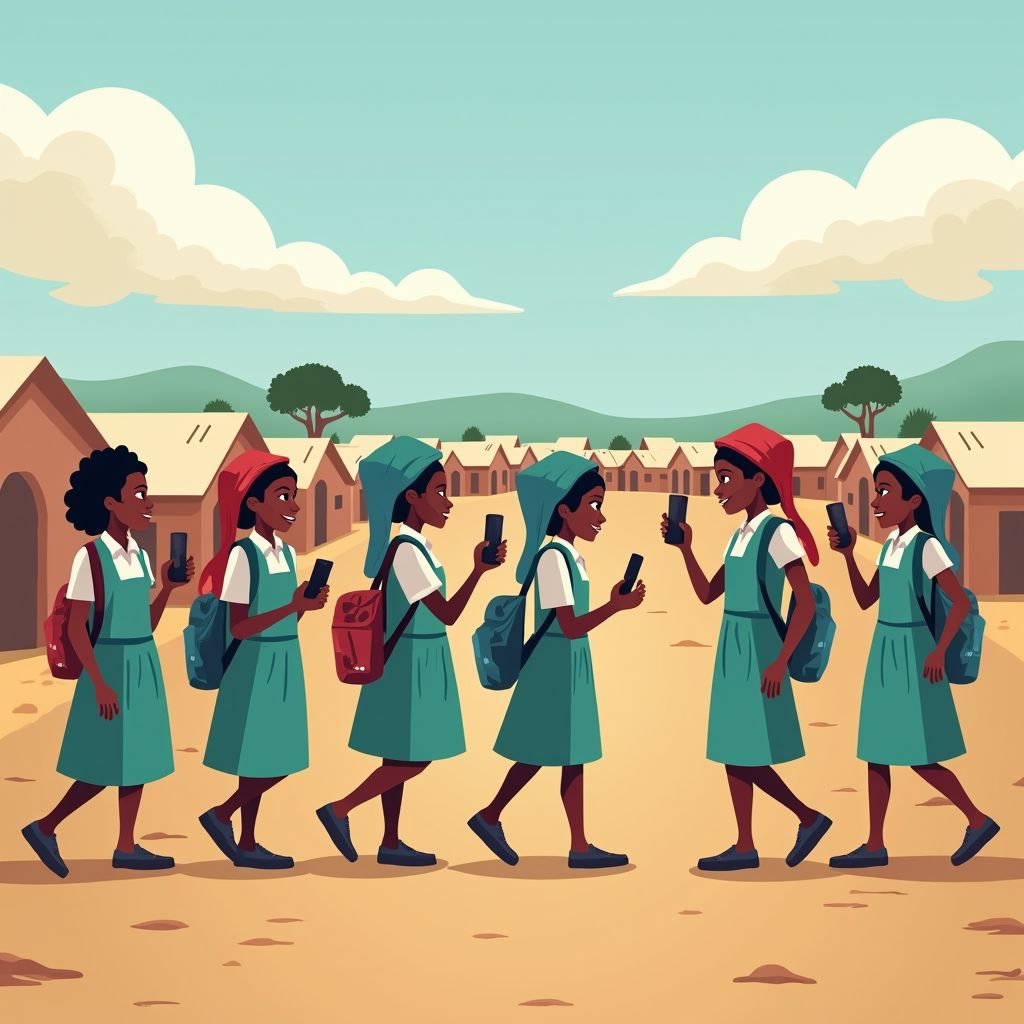
245 refugee students from Kenya’s Dadaab camps are departing for secondary schools nationwide through the 2026 Elimu Scholarship Programme. For 18-year-old Bisharo Mohamed and many others, this marks their first journey beyond the camps they’ve called home their entire lives. The initiative emphasises girls’ education with 130 female recipients.
A Journey Beyond Known Boundaries
Bisharo Mohamed’s metal trunk contains more than school supplies—it holds the weight of unprecedented opportunity. At 18 years old, she has spent her entire life within Kenya’s Dadaab refugee camps, attending school within the camp boundaries since childhood [1]. Now, she will report to Arya Girls Secondary School in Parklands, Nairobi, marking her first visit to Kenya’s capital and her first experience living outside the place she has always called home [1]. “I am excited and scared at the same time,” Bisharo explains. “Dadaab is all I know. Nairobi feels very big, but I want to do well and make my family proud” [1][2]. Her mother, who never attended school herself, watches the preparations with quiet pride: “Seeing my child go this far gives me hope. Even though I will miss her, I know education is her future” [1].
Programme Structure and Geographic Distribution
The 2026 Elimu Scholarship Programme, supported by the Government of Kenya through the Ministry of Education under the Secondary Education Quality Improvement Project (SEEQIP), has strategically placed students across multiple counties [1]. The 245 selected refugee students will join schools in Garissa County, Nairobi, Kisumu, and Kajiado, ensuring geographic diversity in their educational placements [1][2]. The programme demonstrates a commitment to gender equality in education, with 130 girls and 115 boys selected for national school placements [1]. Each student receives comprehensive support including school necessities, stationery, hygiene kits, and pocket money to facilitate their studies [1]. This distribution pattern reflects careful planning to integrate refugee students into Kenya’s broader educational landscape whilst maintaining support networks.
Integration Within National Policy Framework
The scholarship programme operates within Kenya’s broader Shirika Plan, which promotes the systematic inclusion of refugees into national systems, particularly education [1]. This policy framework enables refugee students to study alongside Kenyan peers and access opportunities that extend far beyond camp boundaries [1]. William Ejalu, Head of Sub-Office Dadaab for UNHCR, emphasises the programme’s significance: “For refugee children, school is more than a place to learn. It opens doors to opportunity and helps them build the skills and confidence needed for their future” [1]. The initiative represents a practical implementation of integration policies, moving beyond theoretical frameworks to create tangible pathways for refugee advancement. The timing aligns with Kenya’s commitment to refugee inclusion, demonstrating how national policy translates into individual opportunity.
Long-term Impact and Future Implications
For many students like Bisharo, the programme carries responsibilities that extend beyond individual achievement. “I know many girls and boys are looking up to us,” she reflects. “I want to show that refugees—especially girls—can succeed if given the chance” [1]. As the students prepare to depart Dadaab in March 2026, they carry the collective hopes of families, teachers, and communities who view their journey as progress for future generations [1][2]. The programme’s emphasis on girls’ education, with 53.061 per cent female participation, addresses gender disparities in refugee education [1]. These students represent more than educational statistics—they embody the potential for systemic change in how refugee communities access mainstream educational opportunities. Their success or challenges will likely influence future iterations of similar programmes, making their academic journey a crucial pilot for broader refugee integration initiatives.