

Stricter European Border Policies Threaten to Overwhelm African Host Nations
Nairobi, 30 October 2026
Tightening European Union asylum rules risk stranding thousands of displaced people across Africa, shifting global protection duties onto regional economies already facing severe local humanitarian strain.
Rising External Barriers and Africa’s Protection Burden
The Common Market for Eastern and Southern Africa (Comesa) issued a formal warning that the European Union’s hardening migration policies threaten to strand vulnerable asylum seekers across the continent, directly increasing fiscal and logistical pressures on African host jurisdictions [1][2]. Adopted by regional heads of state and reiterated by Comesa foreign ministers, the assessment centres on the European Union’s Pact on Migration and Asylum, which mandates faster border screenings alongside expedited return mechanisms [1]. As external partner nations pursue offshore processing frameworks and third-country deals—such as exploratory discussions between Italy and Rwanda to take in irregular migrants—the formal legal channels for third-country resettlement continue to narrow [1]. For regional economies, these external border adjustments effectively shift global protection obligations southward onto developing states with already restricted public budgets [1][GPT].
Mounting Inflows and Border Strain Across East Africa
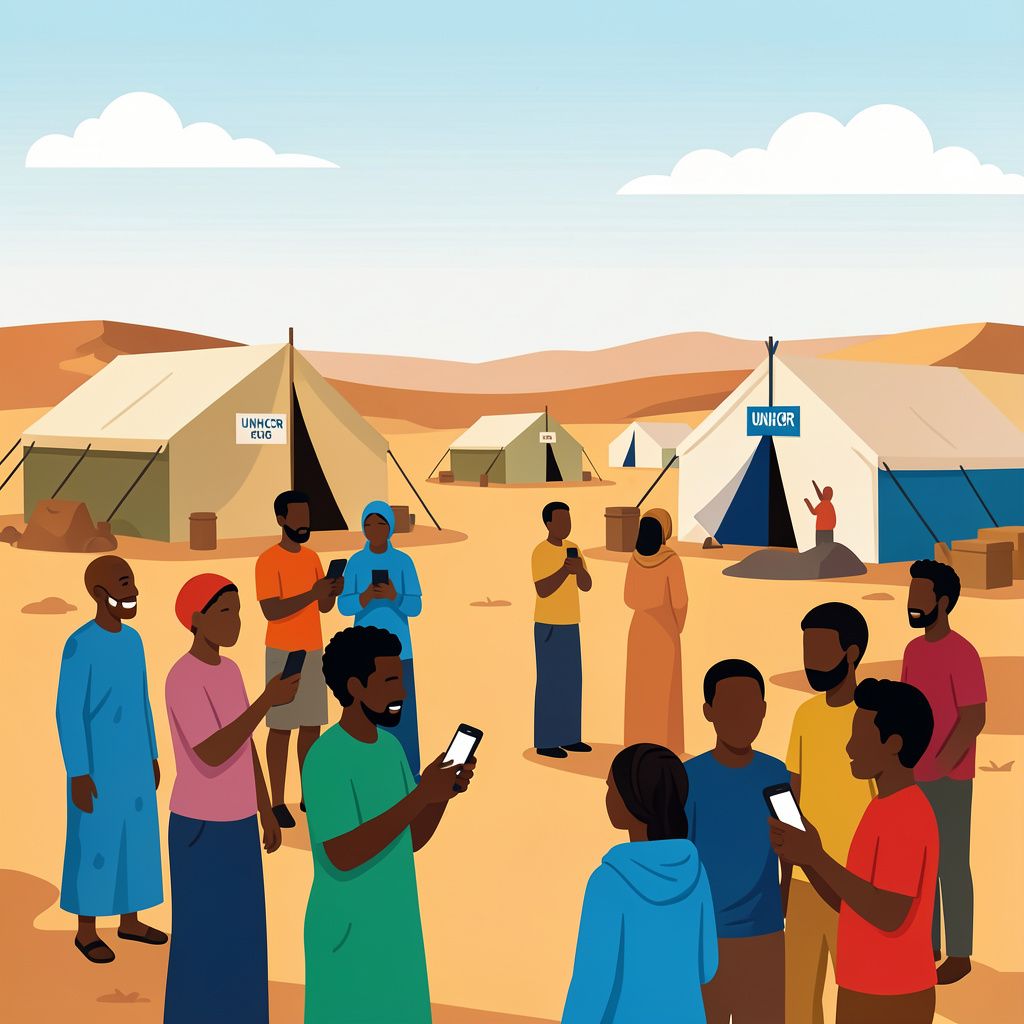
This European policy contraction coincides with an acute escalation in regional humanitarian displacement [1][2]. On 23 October 2026, intensified communal violence in Ethiopia prompted more than 36,000 people to flee across the border through Moyale into Kenya’s Marsabit County [2]. The sudden cross-border movement, comprising predominantly vulnerable women and children, resulted in displaced populations seeking shelter across six temporary camps and adjacent host settlements [2]. In response to the humanitarian shock, the United Nations High Commissioner for Refugees (UNHCR) and local emergency partners deployed joint operations on 29 October 2026 to deliver basic sustenance and shelter support [2].
Turkana’s Settlements and the Compounding Local Squeeze
The closure of global resettlement routes reverberates directly into long-term refugee hubs such as the Kakuma and Kalobeyei settlements in neighbouring Turkana County [GPT]. For both the displaced populations and the local host communities in Turkana, dwindling resettlement quotas mean that local integration becomes an operational necessity rather than a temporary arrangement [GPT]. This dynamic places an acute burden on shared natural resources, communal healthcare facilities, and water networks [GPT]. When external borders harden and emergency influxes occur concurrently, host and refugee communities find themselves navigating the economic shock together, sharing stagnant humanitarian resources while international burden-sharing mechanisms steadily erode [1][2][GPT].
Compounding Geopolitical Vulnerabilities Across the Continent
Broader economic and diplomatic instability across East and Central Africa leaves host nations ill-equipped to absorb permanent demographic pressures [2]. Conflict dynamics have driven Sudan’s domestic currency to record lows, severely weakening trade balances across bordering economies [2]. Concurrently, persistent regional frictions—exemplified by United States sanctions on the Rwandan military, an EU diplomatic envoy decrying stalled peace talks in the Democratic Republic of Congo, electoral disputes before Somalia’s Supreme Court, and delicate US mediation in the Ethiopia-Eritrea border dispute—complicate coordinated multilateral humanitarian relief [1][2]. With regional capacity stretched thin by simultaneous internal conflicts and financial shocks, the European Union’s move to tighten external processing leaves African transit corridors to bear the fiscal and social liabilities of indefinite migrant containment [1][2].