

Israel Shuts Gaza's Lifeline Border Crossing as Iran Strikes Escalate Regional Crisis
Gaza, 1 March 2026
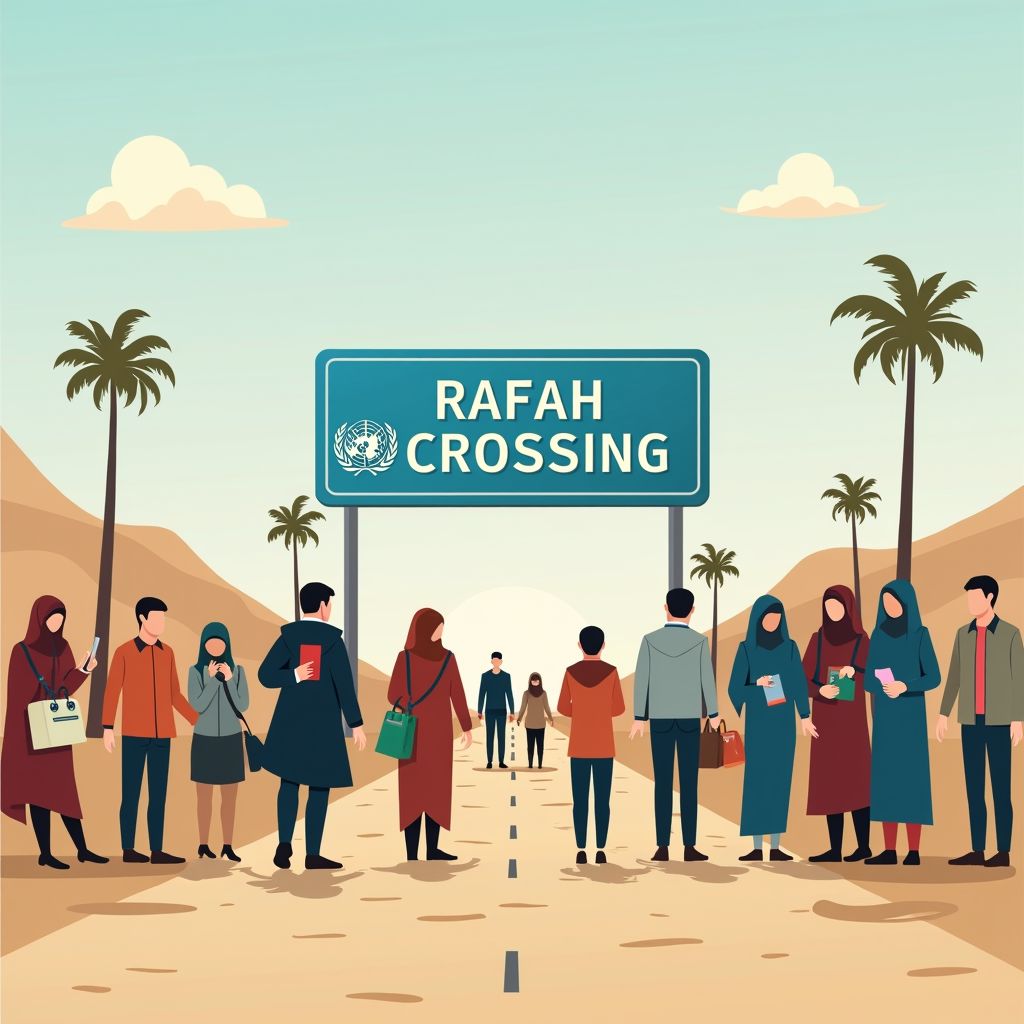
Israel has closed the vital Rafah crossing with Egypt following joint US-Israeli attacks on Iran, cutting off Gaza’s primary humanitarian gateway. The crossing, which had reopened just last month allowing critically ill patients to seek medical treatment abroad, now remains shuttered indefinitely. This closure affects over two million Palestinians who depend on humanitarian aid, with organisations warning of severe impacts on food supplies and medical evacuations. Israeli authorities claim existing food stocks will suffice, though aid groups dispute this assessment amid ongoing restrictions on international relief operations.
Escalation Follows Deadly Iranian Strike
The closure comes as a direct consequence of escalating regional tensions that began with Iran’s devastating ballistic missile attack on the Israeli city of Beit Shemesh, which killed nine civilians and wounded twenty-eight others in what became Israel’s highest single-day casualty count since the conflict’s inception [https://kakuma.bytes.news/7632ea0-Iranian-strike-Israeli-casualties/]. The Israeli Coordinator of Government Activities in the Territories (COGAT) announced on Sunday that ‘several necessary security adjustments have been implemented, including the closure of the crossings into the Gaza Strip, among them the Rafah Crossing, until further notice’ [1]. This security response extends beyond Gaza, with Israel simultaneously closing all barriers and iron gates in the occupied West Bank, the Karameh border crossing between the West Bank and Jordan, and even the Al-Aqsa Mosque in Jerusalem and the Ibrahimi Mosque in Hebron [3].
Humanitarian Consequences Mount
The timing of the closure proves particularly damaging as the Rafah crossing had only reopened approximately one month ago, around 28 January 2026, allowing limited Palestinian traffic for the first time in months, including patients requiring urgent medical care [1][4]. The crossing serves as Gaza’s only border point not controlled directly by Israel and remains crucial for humanitarian aid delivery and medical evacuations for critically ill patients [1]. The closure has immediately disrupted the rotation of humanitarian workers in and out of Gaza, whilst Palestinians rush to markets amid fears of food scarcity and reports of rising prices for basic goods [4]. Hassan Zanoun, displaced from Rafah, expressed typical concerns: ‘We are afraid of not finding milk and diapers for the kids, or food and water’ [4].
Aid Operations Face Compounding Challenges
The border closure compounds existing challenges facing international aid organisations operating in Gaza. On Friday, 27 February 2026, Israel’s Supreme Court issued a temporary injunction allowing aid agencies to continue operating whilst considering a petition from 17 agencies against a government ban that was set to begin on 1 March 2026 [7]. The ban affects 37 aid groups, including major organisations such as Doctors Without Borders, Oxfam, the Norwegian Refugee Council, and CARE [7]. These organisations are responsible for half of the food handouts and 60% of field hospital services in Gaza, with World Central Kitchen alone serving one million meals daily [6]. Shaina Low from the Norwegian Refugee Council warned that despite the court injunction, ‘conditions in Gaza remain catastrophic’ with the ruling not restoring visas or reopening access [7].
Disputed Claims Over Food Security
Israeli authorities maintain that the crossing closure ‘will have no impact on the humanitarian situation in the Gaza Strip’, with COGAT claiming that food supplies entering since the ceasefire began ‘amount to four times the nutritional needs of the population’ and that ‘existing stock is expected to suffice for an extended period’ [1][4]. However, these assertions lack supporting evidence and contradict assessments from international organisations [1]. A UN World Food Program analysis from the week prior to 28 February 2026 indicates that whilst food security has improved—with an average of two meals per day in February 2026 compared to one in July—one in five households still consume only one meal daily [4]. The closure occurs during Ramadan, affecting over two million displaced Palestinians who remain heavily dependent on humanitarian assistance following what has been characterised as Israel’s genocidal war on the territory [1].
Bronnen
- www.aljazeera.com
- www.timesofisrael.com
- www.middleeasteye.net
- halifax.citynews.ca
- www.aljazeera.com
- www.aljazeera.com
- www.aljazeera.com