

Kenya Puts Education First: KSh 781 Billion Budget Allocation Signals Hope for Refugee Learners in Kakuma
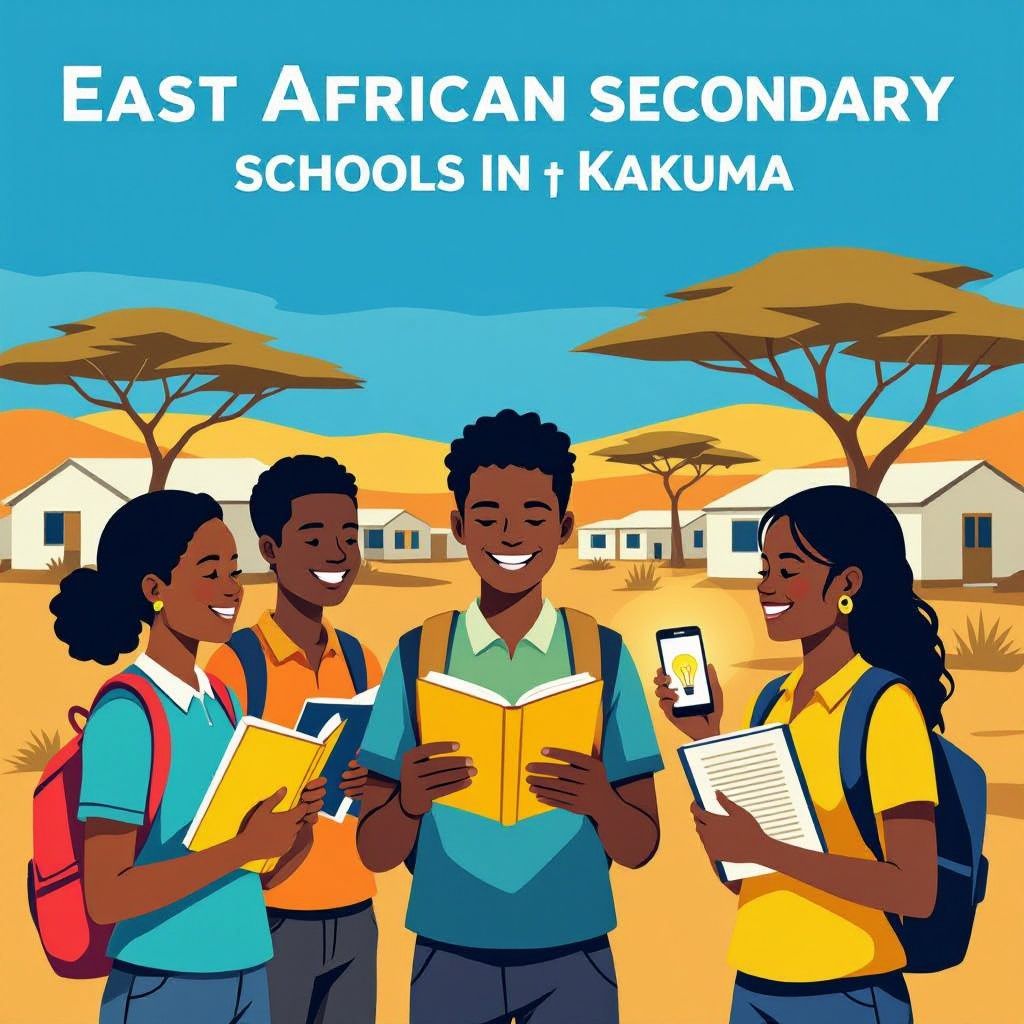
Nairobi, 10 June 2026
Kenya’s 2026/27 budget makes education its single largest investment, allocating KSh 781 billion — with KSh 54.6 billion dedicated to keeping children in secondary school for free.
A Budget Built Around People
On Thursday, 11 June 2026, National Treasury Cabinet Secretary Hon. John Mbadi is scheduled to present the full 2026/27 Budget Statement to Parliament — a moment that follows the National Assembly’s prior approval of the Estimates of Revenue and Expenditure that will govern government spending in the new financial year [6]. Branded ‘Budget Ya Wananchi’ — loosely translated as ‘The People’s Budget’ — the spending plan has been shaped by public participation and is designed to improve service delivery while safeguarding fiscal stability, according to Budget and Appropriations Committee Chairperson Hon. Samuel Atandi [6]. Kenya’s Parliamentary Budget Office has projected economic growth of 4.4% for the 2026/27 period, though Parliament has warned that further tax cuts could create fiscal pressures on the government’s finances [5].
Education Takes the Largest Share
Of all the sectors competing for government funds, education has emerged as the single largest beneficiary of the 2026/27 national budget. The sector has been allocated KSh 781.4 billion to support basic, tertiary, and university education across the country [6]. Within that figure, KSh 54.6 billion has been ring-fenced specifically for the Free Day Secondary Education programme — a direct government subsidy that removes tuition costs at the secondary school level, helping families keep their children enrolled and working towards the Kenya Certificate of Secondary Education (KCSE) [1][6]. A further KSh 56.7 billion has been set aside for the Higher Education Loans Board (HELB), which supports students in universities and colleges, and KSh 4.9 billion has been allocated for the employment of 20,000 intern teachers on permanent and pensionable terms — a measure that directly addresses teacher shortages in underserved areas [6].
What This Means for Kakuma and Kalobeyei
For the hundreds of thousands of people living in the Kakuma refugee camp and the adjacent Kalobeyei Integrated Settlement in Turkana County, this budget carries particular significance. Turkana is one of Kenya’s most resource-constrained counties, and education infrastructure there serves both host community members and refugee families side by side [GPT]. The Free Day Secondary Education allocation of KSh 54.6 billion is designed to keep children in accredited secondary schools without placing the burden of tuition fees on families — a policy that applies to public secondary schools across Kenya, including those in refugee-hosting counties [1][6]. Families in Kakuma and Kalobeyei are encouraged to ensure their children are registered in accredited schools and to speak with education officers at the camp about available scholarships and bursaries [alert! ‘Specific scholarship and bursary availability for refugee learners in Kakuma in 2026/27 was not confirmed in the provided sources — families should verify directly with UNHCR education partners’]. The national commitment to hiring 20,000 additional teachers also has the potential to ease the acute shortage of qualified educators that has long affected schools in remote and refugee-hosting areas [6].
Innovation Filling the Gaps: EdTech in the Camps
Even as the national budget signals increased investment in education, significant structural challenges remain for refugee learners in Kakuma and Dadaab. Over 3 million refugee students in East Africa currently lack access to functional science laboratories and quality academic resources, with language barriers affecting an estimated 40% of learners globally — a figure that compounds sharply for refugees being taught in a third language [8]. Into this gap has stepped Neurollect Audread, an AI-powered, offline-first EdTech platform founded by refugee youth Joseph Gakah and Mamuch Bey, and built specifically for refugee and underserved high school students in Kenya [8]. Fully aligned to the KCSE curriculum, the platform delivers interactive 3D virtual science laboratories, a multilingual AI tutor supporting Somali, Swahili, and over 15 African languages, interactive video lessons, digital textbooks, and a credits-for-school-supplies rewards system — all designed to function in low-connectivity environments [8]. Pilot testing ahead of the KCSE 2024 examinations demonstrated an approximately 20% improvement in science scores among participating students, and a full-scale launch across Kakuma refugee camp schools is now underway in 2026 [8]. The platform has been recognised as runner-up at the Mozilla Africa Mradi Innovation Pitch Competition, incubated at iBiz Africa and Strathmore University, and named winner of the Social Shifters Global Innovation Challenge 2026 [8].
A Shared Future for Host and Refugee Communities
Kenya’s 2026/27 education allocation does not exist in isolation. The broader budget includes KSh 175.5 billion for health — with KSh 18.5 billion directed at programmes combating HIV/AIDS, malaria, and tuberculosis — as well as KSh 25 billion for cash transfers to older persons and KSh 8.9 billion for orphans and vulnerable children [6]. These allocations matter directly to communities in Turkana, where host families and refugee families share clinics, schools, and economic spaces. The KSh 16.3 billion allocated for rural electrification and KSh 7.5 billion for national grid expansion could, over time, improve connectivity in remote counties like Turkana, opening the door to digital learning tools such as those being piloted by platforms like Audread [6][8]. The overarching message of the ‘Budget Ya Wananchi’ is one of investment in people — and for the families of Kakuma and Kalobeyei, that investment, if implemented effectively, translates into more teachers in classrooms, fewer children dropping out of secondary school, and better-resourced pathways to a KCSE qualification and the opportunities it can unlock [1][6].
Bronnen
- x.com
- x.com
- x.com
- www.facebook.com
- www.facebook.com
- www.parliament.go.ke
- www.facebook.com
- reframe.network