

Somaliland Demonstrates Military Modernisation with New Combat Drills
Hargeisa, 29 October 2026
Somaliland has launched extensive readiness exercises incorporating drone warfare and heavy armour, signaling a strategic upgrade to its defence capabilities that highlights shifting Horn of Africa security dynamics.
Operational Scope of HEEGAN 2026
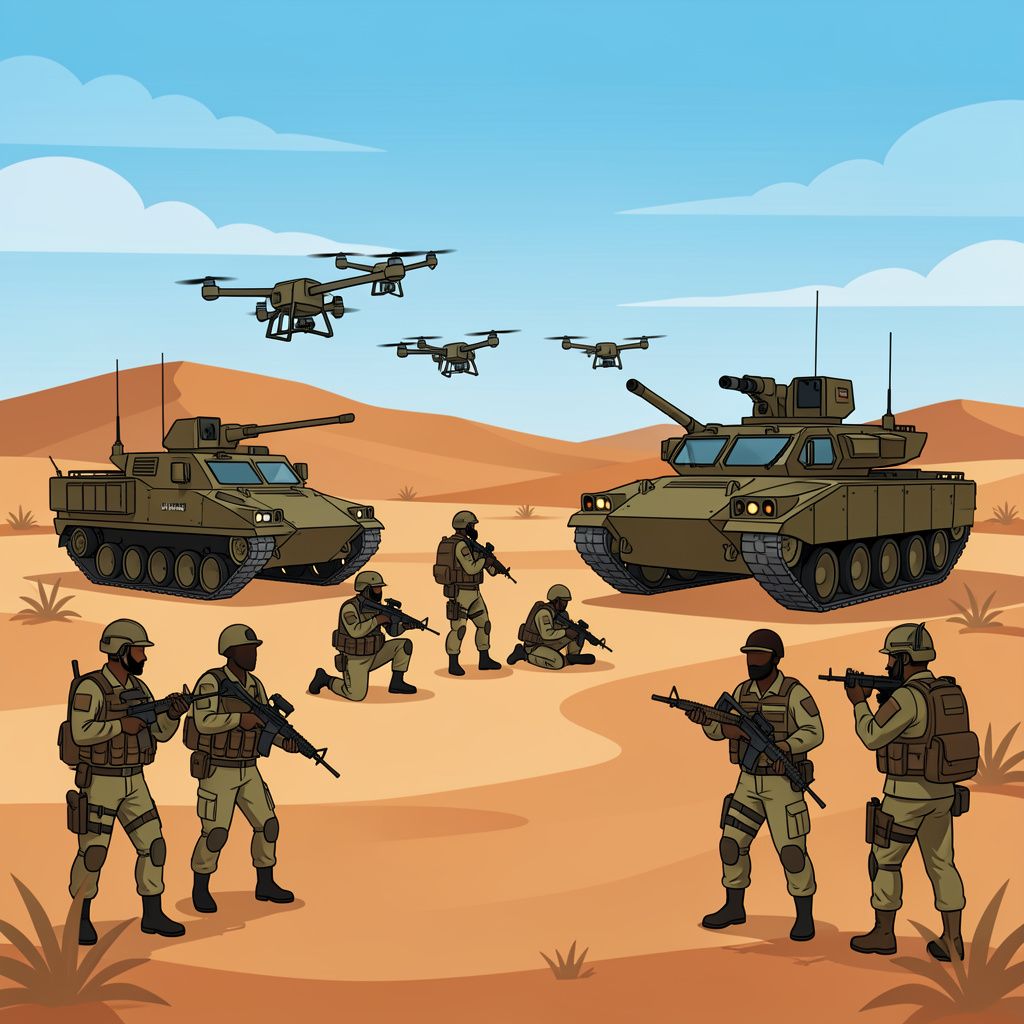
On Wednesday, 28 October 2026, the Somaliland military commenced extensive operational training manoeuvres near Hargeisa under the exercise name HEEGAN 2026 [1][4]. Officially launched by the military chief, Brigadier General Nimcan Yusuf Gahnug, the field operation integrates combined arms manoeuvres featuring heavy artillery, battle tanks, armoured personnel vehicles, and unmanned aerial vehicles [1]. According to statements released by the military’s General Command, the operational program will unfold across several weeks, incorporating live-fire combat drills, integrated weapons trials, and multilateral operational testing across distinct branches of the national armed forces [1].
Strategic Modernisation and Tactical Integration
The deployment represents an intentional shift towards modern combined-arms operations designed to align territorial forces with evolving battlefield technologies [1]. Military authorities confirmed that HEEGAN 2026 is scheduled to institutionalise into a recurring annual training regimen, establishing an ongoing assessment framework to test combat proficiency, unit interoperability, and responsiveness to emerging regional threats [1]. Observers also identified testing sites such as the Badarwanaag military installation outside Hargeisa, highlighting an emphasis on showcasing newly upgraded military platforms and modernised artillery systems to reinforce defensive capabilities [7].
Public Safety Directives and Pastoral Safeguards
In conjunction with live munitions operations, the General Command published safety advisories directing rural settlements, pastoralists, and inhabitants in Benderwanaag and neighboring districts to steer clear of active firing corridors and designated operational perimeters [1]. Due to heavy artillery detonations and rapid mechanised unit movements, civilian movements and domestic livestock herds are required to observe strict exclusion parameters to prevent casualties and collateral damage to pastoral property [1]. To enforce operational boundaries and minimise civilian interference, security forces have erected warning markers and perimeter checkpoints throughout active exercise sectors [1].
Implications for Cross-Border Stability and Displaced Communities
For displaced populations residing across refugee complexes such as Kakuma and the Kalobeyei integrated settlement in Turkana County, military readiness exercises within the Horn of Africa serve as a barometer for border security and regional stability [GPT]. When regional armed actors transition toward upgraded aerial surveillance and heavy conventional equipment, borderland corridors experience heightened securitisation, directly influencing migration management and voluntary repatriation viability [GPT]. In northwest Kenya, where host communities and refugees share limited resources and regional trade pathways, monitoring military dynamics assists aid bodies and local authorities in evaluating frontier safety and preparing for potential fluctuations in displacement pressures [GPT].
Bronnen
- www.hiiraan.com
- www.facebook.com
- www.facebook.com
- www.facebook.com
- www.facebook.com
- www.facebook.com
- www.facebook.com
- www.facebook.com