

Kenyan Boys' Schools Dominate STEM Resources While Girls Face Educational Disadvantage
Nairobi, 13 May 2026
A striking educational divide emerges in Kenya’s secondary schools, with boys’ institutions commanding significantly superior resources and opportunities. The 2026 Gender Report reveals that whilst 62.1% of boys’ schools offer 12 or more subjects, only 58.5% of girls’ schools provide similar breadth. Most alarming is the STEM gap: boys’ schools are 18.3% more likely to have physics laboratories, with merely 21.8% of girls’ schools possessing chemistry labs. Computer access tells an equally concerning story—57.5% of boys’ schools offer computing lessons compared to just 24.9% of girls’ schools. This resource disparity, published on 11 May 2026, fundamentally shapes career trajectories and perpetuates gender inequality in Kenya’s crucial STEM sectors.
Laboratory Access Creates Science Education Divide
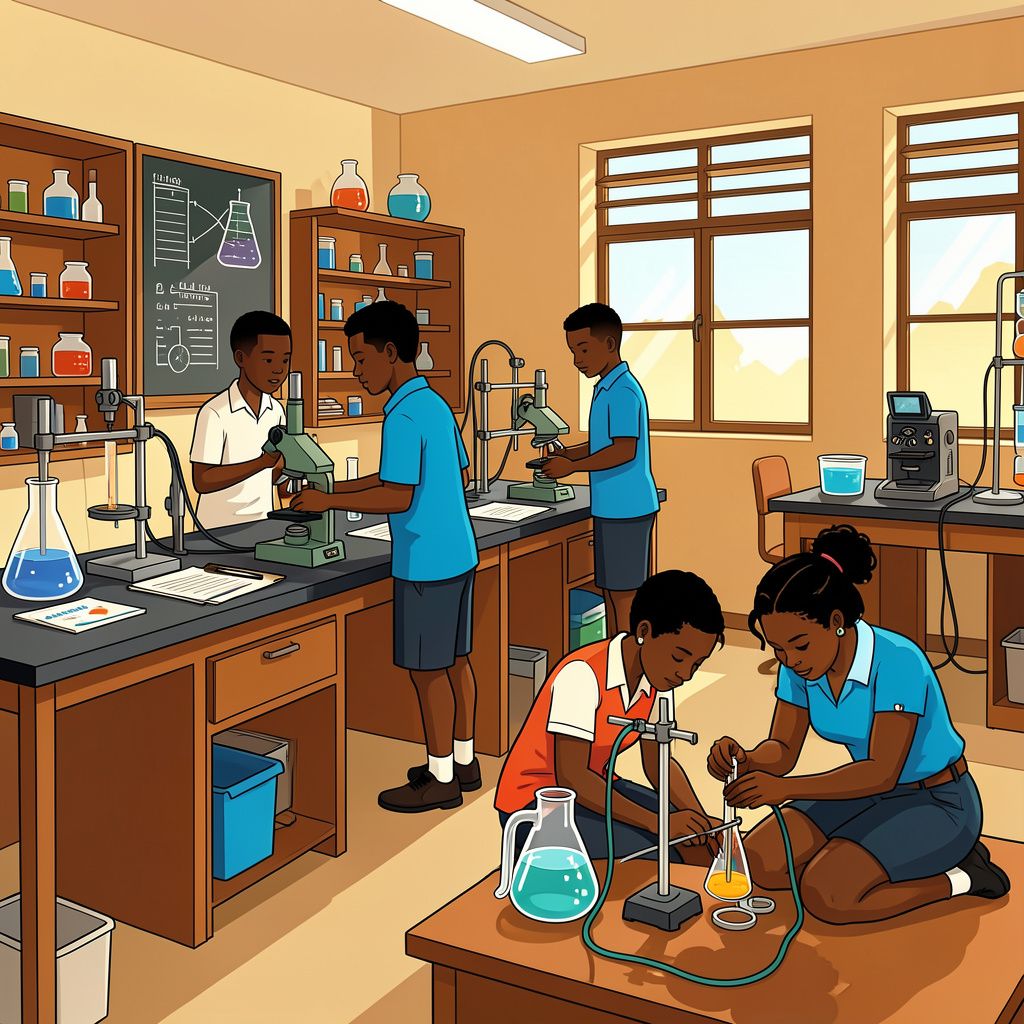
The disparity becomes most pronounced in critical laboratory facilities essential for STEM education. Boys’ schools demonstrate overwhelming advantages across all major science disciplines, being 13.6% more likely to possess chemistry laboratories and 13% more likely to have biology laboratories compared to girls’ schools [1]. The physics laboratory gap presents the starkest contrast, with boys’ schools holding an 18.3% advantage over their female counterparts [1]. These figures translate into a concerning reality: only 21.8% of girls’ schools have access to chemistry laboratories, fundamentally limiting hands-on learning opportunities in one of Kenya’s most crucial academic disciplines [1]. Such laboratory shortages directly impact students’ ability to conduct practical experiments, understand scientific concepts, and develop the technical skills increasingly demanded by Kenya’s growing technology and healthcare sectors.
Digital Education Gap Widens Career Prospects
The technological divide further compounds educational inequalities, with computer education access revealing a substantial gap between school types. Boys’ schools lead significantly in digital education provision, with 57.5% offering computer lessons compared to merely 24.9% of girls’ schools [1]. This disparity extends to physical infrastructure: 58.6% of boys’ schools operate functional computer laboratories, whilst only 23.1% of girls’ schools possess similar facilities [1]. Teacher access to digital devices presents another concerning metric, with 48.1% of boys’ schools reporting adequate teacher digital device access compared to just 28.5% in girls’ schools [1]. Despite 66% of all schools having functional computer laboratories nationwide, the uneven distribution clearly disadvantages female students seeking technology-related career pathways [1].
Teaching Staff Gender Imbalances Affect STEM Learning
Staffing patterns in girls’ schools reveal additional challenges that may impact student performance and career aspirations in STEM subjects. Mathematics instruction in girls’ schools shows a 2:1 ratio of male to female teachers, whilst physics demonstrates an even more pronounced 3:1 male-to-female teaching ratio [1]. These gender imbalances in teaching staff could influence female students’ confidence and engagement in traditionally male-dominated subjects [GPT]. The shortage of female STEM teachers in girls’ schools potentially limits role model availability and may contribute to reduced female participation in science and technology career tracks following secondary education [GPT]. Combined with inferior laboratory facilities and limited computer access, these staffing patterns create a compounding effect that systematically disadvantages female students’ STEM education outcomes.
Basic Infrastructure Gaps Extend Beyond Academics
The educational disparities extend well beyond classroom resources to fundamental school infrastructure that supports comprehensive student development. Boys’ schools demonstrate clear advantages in basic facilities, with 71% possessing dining halls compared to only 31.6% of girls’ schools and 41.7% of mixed institutions [1]. Physical education and recreational opportunities also favour boys’ schools, with 85% having playgrounds compared to 72.7% of girls’ schools and 76.6% of mixed schools [1]. These infrastructure differences affect students’ overall school experience, nutritional support, and physical development opportunities. For refugee students and families seeking quality secondary education in Kenya, these facility disparities represent significant considerations when evaluating school options. The 2026 Gender Report, published on 11 May 2026, emphasises how these combined resource gaps create systematic disadvantages that extend far beyond immediate educational outcomes, potentially affecting long-term career prospects and economic opportunities for female students throughout their professional lives [1].