

Iran's Supreme Leader Killed in Joint Israeli-American Strike
Tehran, 1 March 2026
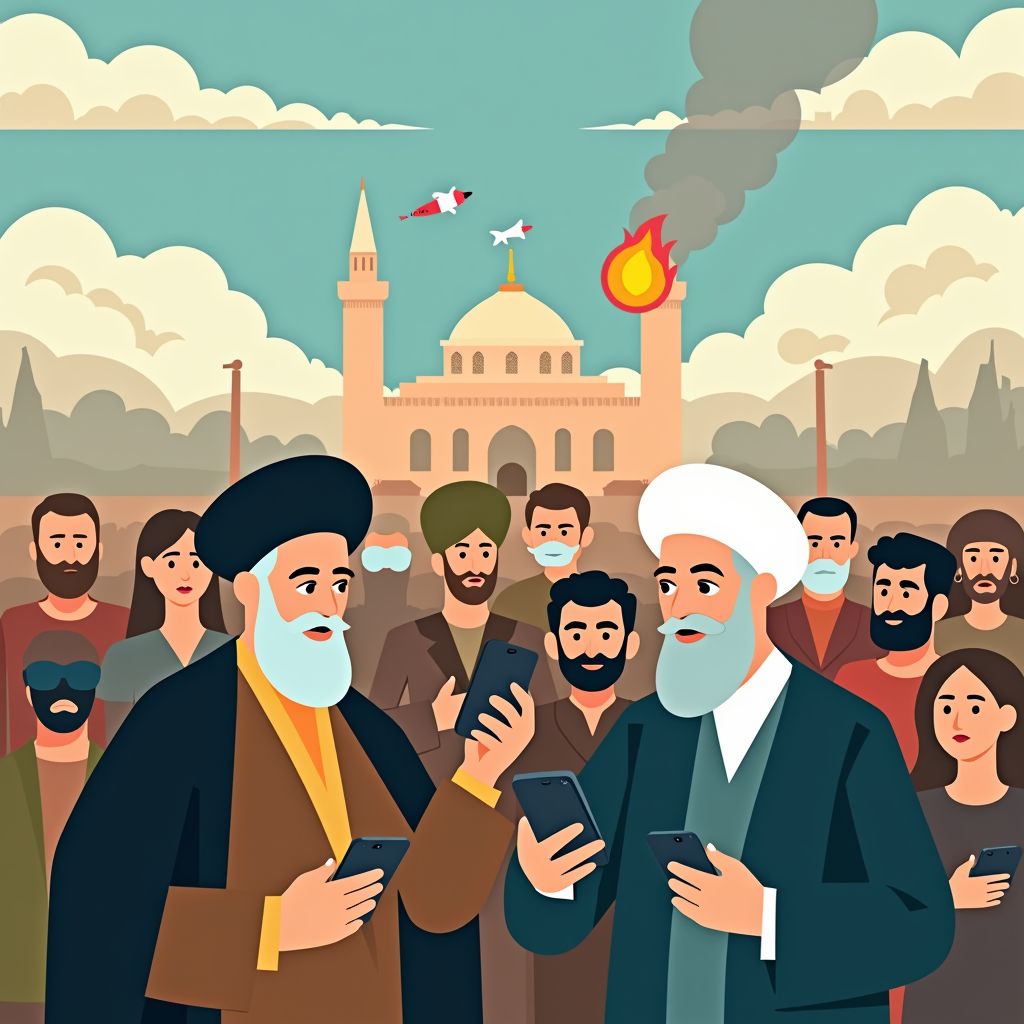
Ayatollah Ali Khamenei died aged 86 on Saturday following coordinated airstrikes on his Tehran compound, ending his 37-year rule over Iran. The attack also killed senior Revolutionary Guard commanders and security advisers, prompting Iran to declare 40 days of mourning and launch retaliatory missile strikes across the Middle East. Regional airports closed as tensions escalated dramatically, with Iran’s military promising their largest-ever offensive against Israeli and American bases in response to what they called an unprecedented act of war.
Escalation from Operation Epic Fury
The death of Iran’s Supreme Leader represents the most dramatic escalation since the United States launched Operation Epic Fury on 28 February 2026. What began as coordinated strikes targeting Iran’s military capabilities has now resulted in the elimination of the country’s highest authority, fundamentally altering the balance of power in the Middle East [1][2]. President Trump announced Khamenei’s death on social media hours before Iranian state television officially confirmed the loss of their leader who had ruled since 1989 [2][4]. The strikes also killed the head of Iran’s Revolutionary Guard and Mohammed Pakpour, a Revolutionary Guard commander, alongside Ali Shamkhani, Khamenei’s top security adviser [1][2].
Iran’s Immediate Response and Casualties
Iran’s retaliation was swift and widespread, with the country launching hundreds of missiles and drones across the Middle East in response to the assassination [4]. The attacks caused significant civilian casualties, with Iran’s Red Crescent reporting over 200 deaths and 747 injuries across 24 provinces on Saturday [4]. The Iranian strikes reached as far as Dubai, where the international airport and Burj Al Arab hotel sustained damage, injuring four people [4]. An incident at Zayed international airport in Abu Dhabi resulted in one fatality and seven injuries [4]. Iran’s Cabinet warned that this ‘great crime will never go unanswered’, whilst Ali Larijani, secretary of Iran’s National Security Council, posted on social media that ‘The brave soldiers and the great nation of Iran will deliver an unforgettable lesson to the hellish international oppressors’ [1].
Regional Aviation Crisis and Airspace Closures
The conflict has created unprecedented disruption to regional aviation, with Israel, Qatar, Syria, Iran, Iraq, Kuwait and Bahrain all closing their airspace, stranding hundreds of thousands of travellers [4]. This coordinated airspace shutdown reflects the severity of the regional crisis and demonstrates how the conflict has moved beyond the primary combatants to affect neutral Gulf states [GPT]. The aviation disruption compounds the economic implications of the crisis, as these countries serve as crucial transit hubs for international air travel between Europe, Asia and Africa [GPT]. Canada’s Foreign Affairs Minister Anita Anand issued a statement strongly condemning ‘the attacks of the Iranian regime against our partners in the Middle East’ and advised Canadians to avoid all travel to a number of countries in the Middle East [1].
Power Vacuum and Future Implications
Iran has moved quickly to establish interim governance structures following Khamenei’s death, with Iranian President Masoud Pezeshkian, hard-line judiciary chief Gholamhossein Mohsensi Ejei and a member of the Guardian Council forming a council to select a new supreme leader [1]. The country has declared 40 days of public mourning and a seven-day nationwide public holiday to honour the deceased leader [1][4]. However, Iran’s Revolutionary Guard has promised their ‘biggest offensive operation ever’ targeting US bases and Israel, suggesting the cycle of violence will continue despite the leadership transition [4]. Israeli forces launched another wave of strikes on Iran on Sunday, 1 March 2026, targeting the country’s ballistic missile and air defence systems, with explosions heard in Tehran [4]. The conflict represents a fundamental shift in Middle Eastern geopolitics, with potential implications for global oil markets and regional stability that extend far beyond the immediate military actions [GPT].