

Trump Claims US Navy Acts Like Pirates in Iranian Port Blockade
Washington, 3 May 2026
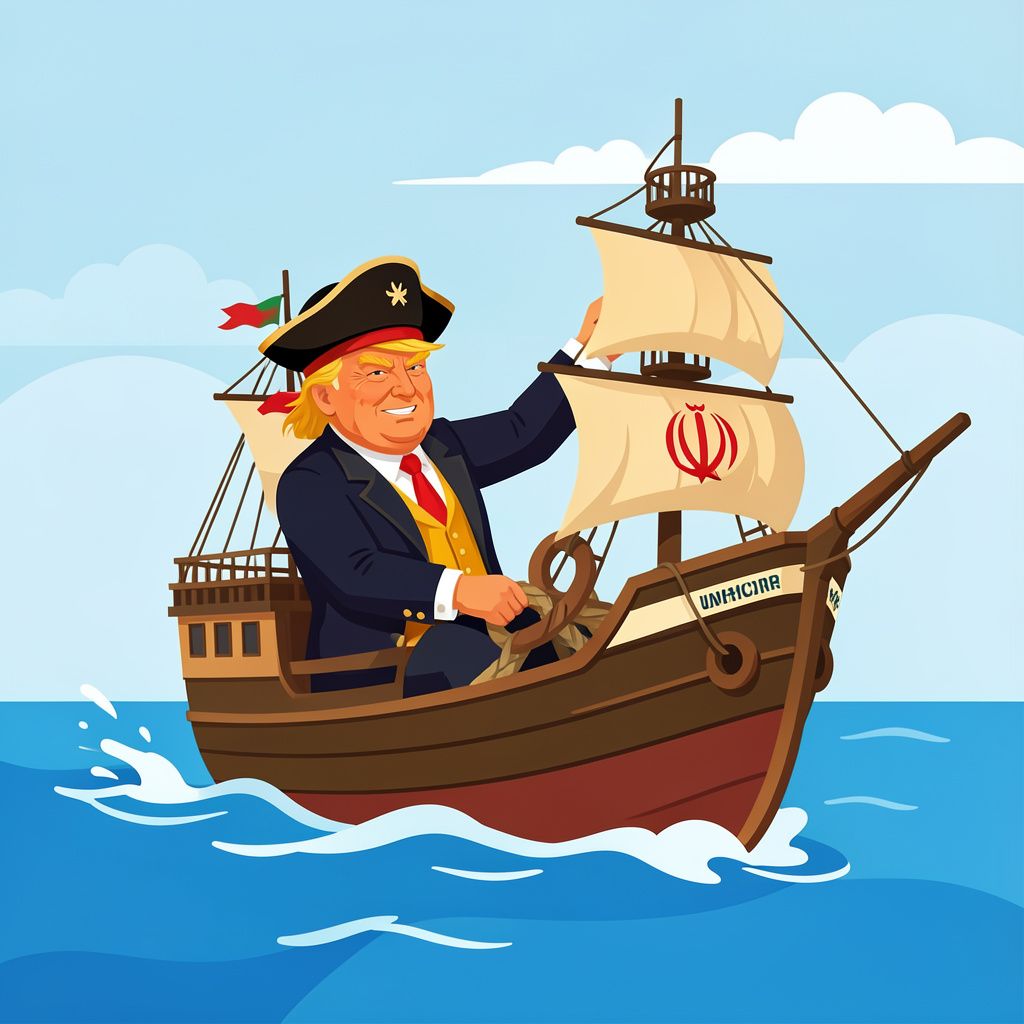
President Trump boasted that American naval forces are operating ‘like pirates’ while enforcing a blockade of Iranian ports, seizing ships and cargo in what he called ‘a very profitable business’. The controversial remarks come as the US-Iran conflict reaches a critical 60-day legal deadline under the War Powers Resolution, forcing Trump to either end military action or seek Congressional approval for continued operations.
Naval Operations and Congressional Deadlines
The provocative comments came during an event in Florida on Friday, where Trump detailed the financial benefits of the naval blockade operations [1]. Trump told attendees that American forces had ‘took over the ship, we took over the cargo, we took over the oil’, describing the seizures as ‘a very profitable business’ [1]. The remarks underscore the aggressive nature of US operations in the Indian Ocean, where naval forces have intercepted Iranian vessels carrying oil supplies.
Escalating Maritime Tensions
The naval blockade has already resulted in concrete action against Iranian shipping. According to a US Department of Defense statement, American naval forces intercepted and boarded two oil tankers in the Indian Ocean on 20 April and 22 April respectively [1]. These vessels were allegedly transporting oil from Iran, highlighting the strategic focus on disrupting Iranian energy exports as part of the broader military campaign [1]. The seizures represent a significant escalation in maritime enforcement actions against Iranian commercial shipping.
Implications for East African Communities
The naval blockade and potential disruption to Iranian oil exports could have far-reaching economic consequences for East African countries, particularly those hosting large refugee populations [GPT]. Oil price volatility typically translates into higher fuel costs, which in turn affect transportation expenses for essential goods and humanitarian supplies [GPT]. In Kenya, where substantial refugee communities depend on international aid programmes, any increase in fuel costs could impact the delivery and affordability of critical assistance, potentially affecting both refugee and host community access to essential services and food supplies [GPT].