

Deadly Health Misinformation Videos Claim Lives Across Africa
Nairobi, 7 May 2026
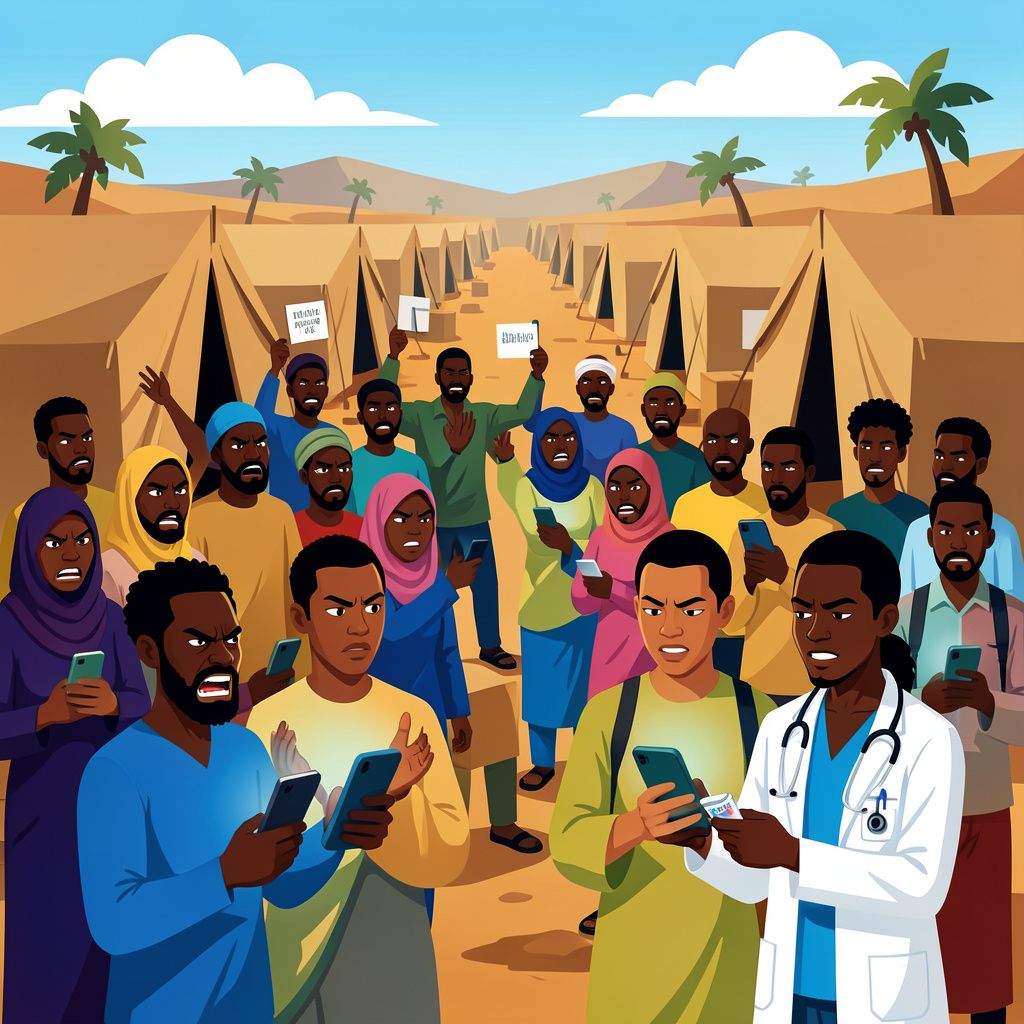
False medical advice spreading through social media is causing deaths across Africa, with at least 17 people killed in the Democratic Republic of Congo alone due to rumours about a fabricated illness. Health workers conducting vaccination research were murdered by angry mobs who believed misinformation claiming men’s genitals were atrophying from a mysterious disease. The crisis highlights how vulnerable populations, including refugees, are particularly susceptible to dangerous medical myths that discourage proper healthcare seeking. African health authorities are struggling to counter these viral falsehoods that often promote unproven treatments over established medical care.
The Tshopo Province Tragedy
The devastating impact of health misinformation became tragically clear in October 2025 when four health workers conducting vaccination research were killed by angry mobs in Tshopo province, northeastern Democratic Republic of Congo [1]. The murders were sparked by false rumours claiming a mysterious illness was causing men’s genitals to atrophy, which spread rapidly through villages blanketed in rainforest [1]. These fabricated claims proliferated on social media platforms, amplifying an imaginary threat that created real-life panic before government authorities could respond effectively [1]. The incident represents one of the most deadly examples of how online health misinformation is claiming lives across Africa [1].
Rising Death Toll from Medical Myths
The crisis extends far beyond the Tshopo incident, with at least 17 killings related to health misinformation rumours reported across the Democratic Republic of Congo [1]. Health workers like Dr. John Tangakeya have paid the ultimate price for attempting to provide accurate medical information to communities plagued by false narratives [2]. His widow, Justine Tangakeya Basekauke, was interviewed by Reuters in Kisangani on 16 April 2026, highlighting the personal tragedies behind these statistics [2]. The pattern of violence against healthcare professionals underscores how deeply entrenched these dangerous myths have become in vulnerable communities [1][2].
WHO’s Response to African Health Crisis
The World Health Organization’s Africa Regional Director, Professor Mohamed Janabi, addressed the mounting health security challenges during a press conference in Accra, Ghana on 7 May 2026 [3]. Speaking about Africa’s direct impact from the Hantavirus outbreak, with patients being treated in South African hospitals, Professor Janabi emphasised that the situation requires coordinated international response with strong health systems [3]. He outlined three key priorities: better plans to protect training investments, scalable training methods, and improved working environments for health workers [3]. ‘If we do this properly, we won’t just be fighting Hantavirus,’ Professor Janabi stated, ‘We will be strengthening Africa’s health security against any future threats’ [3].
Fighting the Infodemic
Health authorities across Africa are implementing technological solutions to combat the spread of dangerous medical misinformation [GPT]. Dr. Bavon Tangunza, who specialises in countering health misinformation, demonstrated infodemic applications at the World Health Organization headquarters in Kinshasa on 23 February 2026 [1]. These digital tools represent part of a broader strategy to identify and neutralise false health information before it can cause harm to communities [1]. The challenge remains significant as misinformation often spreads faster than accurate information through social media networks that reach rural and urban populations alike [GPT].