

Kenya Marks 63 Years of Self-Rule with Celebrations Reaching Its Most Marginalised Communities
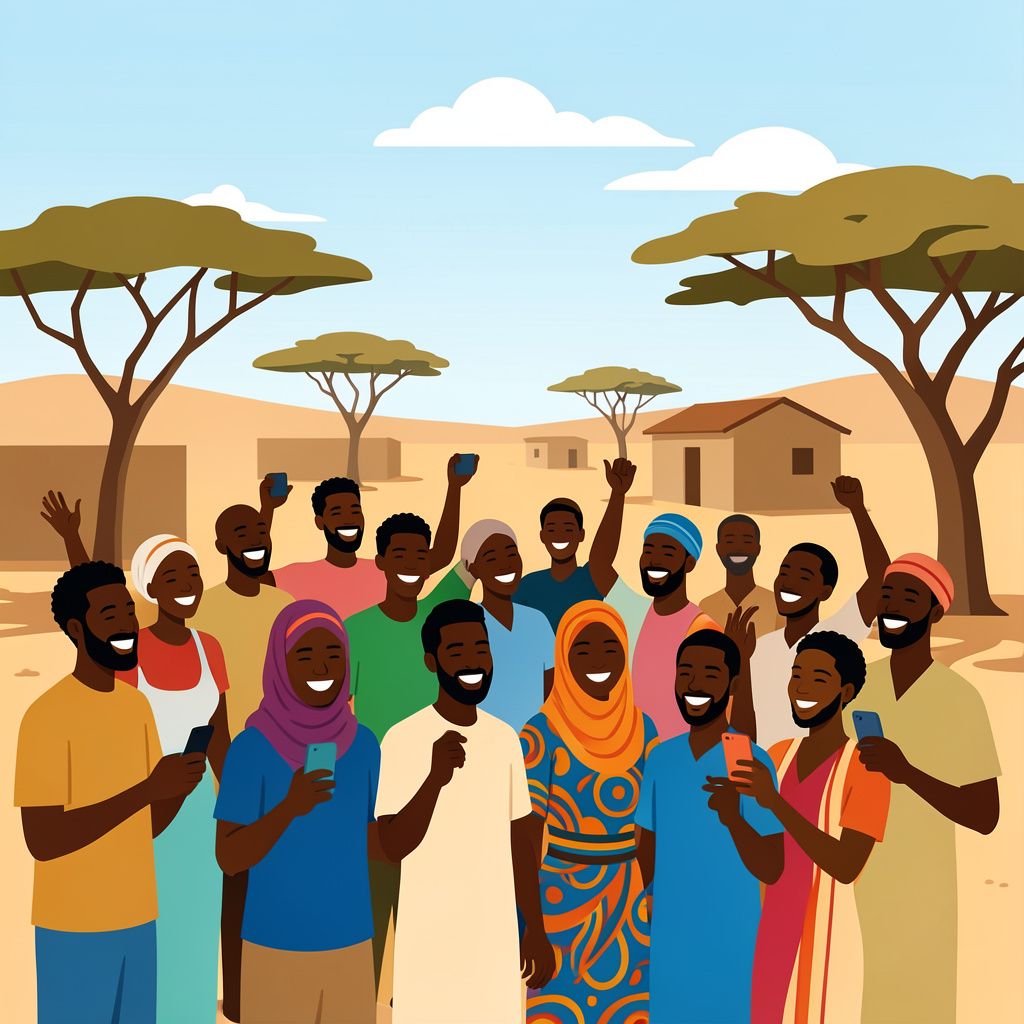
Kakuma, 1 June 2026
From Kakuma’s Lokiding village to Wajir County, Kenya marks 63 years since gaining self-governance in 1963. Most strikingly, this year’s national celebrations are hosted in Wajir, where KSh 57.6 billion in development projects signal a historic shift for long-neglected North Eastern Kenya.
A Holiday With Deep Roots — and Fresh Meaning
Madaraka Day, observed every year on 1 June, commemorates the moment in 1963 when Kenya attained internal self-government from British colonial rule — a foundational step on the road to full independence later that year [GPT]. The Swahili word ‘madaraka’ translates directly as ‘self-governance’ or ‘responsibility’, and for 63 years the holiday has served as a reminder of the values of freedom and self-determination that underpin the Kenyan state [GPT]. This year, those values are being tested and reaffirmed simultaneously, as celebrations stretch from the capital to some of the country’s most geographically and historically marginalised corners [4][5].
Lokiding Takes Centre Stage in Kakuma
In Turkana County’s Kakuma Ward, this morning’s official local celebrations are taking place at Lokiding, Morungole Village Unit, Morungole Sub-Location, with the ceremony scheduled to begin at 10:00 a.m. on 1 June 2026 [1][3]. The choice of Lokiding as the local venue is significant: Kakuma hosts one of the world’s largest refugee settlements, meaning today’s celebrations bring together Kenyan host-community members and tens of thousands of refugees who call this remote corner of Turkana County their temporary home [GPT]. For that mixed community, Madaraka Day carries a particular resonance — it is a reminder that the right to self-determination, whilst not yet available to those who remain stateless or displaced, is a principle worth honouring and working towards [7].
What the Holiday Means for Refugees in Kakuma
Refugees residing in and around the Kakuma and Kalobeyei settlements are encouraged to observe today as a public holiday, with government offices and some service providers likely to operate on reduced schedules [1]. For the refugee community, Madaraka Day is not merely a Kenyan civic occasion — it is an opportunity to reflect on the host country’s own journey from colonial rule to self-governance, a journey that mirrors, in many respects, the aspirations of the displaced communities who have sought safety on Kenyan soil [GPT]. Educational and civil society organisations active in the region have used the occasion to reinforce messages of empowerment and collective progress; the Angaza Center, an educational technology organisation working with rural Kenyan member schools and community partners, shared a message on 30 May 2026 emphasising that ‘Madaraka Day reminds us of the power of self-determination, empowerment and collective progress’ [7]. The organisation added: ‘As we celebrate Kenya’s journey, we also celebrate everyone working to create opportunities and unlock potential in our communities’ [7].
The Eve of Celebration: Turkana’s Communities Mark the Occasion Together
The festive mood along the Lodwar–Kakuma corridor was already evident on the evening of Sunday, 31 May 2026, when Quitos Lounge HQ — situated along the Lodwar–Kakuma Highway — hosted a pre-Madaraka Day event billed as ‘The Riddim Showdown’, featuring DJs Kibe and Kaka performing reggae, dancehall, and riddim sets to mark the holiday eve [6]. The event, announced on 28 May 2026, reflected the communal character of Madaraka Day celebrations in Turkana County, where host and refugee communities increasingly share social and cultural spaces along the highway corridor that links Lodwar to the Kakuma settlement [6][GPT]. Such grassroots celebrations, while modest in scale, illustrate how the holiday has taken on genuinely local meaning even in communities that came into being long after 1963 [GPT].
Wajir Hosts the National Ceremony — and a KSh 57.6 Billion Commitment
At the national level, the most symbolically charged decision taken ahead of this year’s Madaraka Day was the choice to host the 63rd national celebrations in Wajir County — deep in North Eastern Kenya, a region that has historically felt peripheral to Nairobi’s development agenda [4][5]. Nation Africa described the decision as ‘symbolic, strategic and transformational’, arguing that the hosting of the celebrations in Wajir signals a genuine pivot in how the Kenyan state relates to its north-eastern frontier [4]. The government has backed that symbolism with substantial financial commitments: over 37 development projects valued at approximately KSh 57.6 billion are currently being executed across Garissa, Wajir, and Mandera, covering infrastructure, security, housing, and water and sewerage systems [4][5]. Among the specific infrastructure projects scheduled for commissioning around today’s celebrations are the 20-kilometre Wajir urban roads programme and the Wajir Stadium [4][5] — though the precise commissioning status of those facilities as of this morning remains [alert! ‘source material flags these as scheduled for commissioning around 1 June 2026 but does not confirm completed commissioning’].
A Region Once Defined by Suspicion, Now Targeted for Integration
The road to today’s national celebrations in Wajir has been a long one. President William Ruto visited Wajir County in December 2024, pledging equal opportunities, services, and development for the region [4][5]. He returned on 12 February 2026, accompanied by Deputy President Kithure Kindiki, to attend the final event of phase one of the Nyota Programme in Wajir County [4]. Prior to 29 May 2026, Cabinet Secretary for Interior and National Administration Kipchumba Murkomen also held engagements in Wajir to reinforce the government’s commitment to security and economic integration in North Eastern Kenya [5]. Active infrastructure projects in the broader region include the construction of the Wajir–Tarbaj and Tarbaj–Kotulo road corridors, the Garissa–Ijara–Lamu road corridor, the new Tana River Bridge, and the rehabilitation of the Garissa Airstrip [5]. The government’s national integration agenda in the region also encompasses multi-agency border security operations with Somalia, counter-terrorism efforts, the management of refugee populations in both Dadaab and Kakuma, and an expansion of access to national identity cards for long-marginalised citizens [4][5].
Citizenship as a Right, Not a Favour
Perhaps the most striking articulation of the government’s stated shift in approach came from Dr Omollo, the Principal Secretary for Internal Security and National Administration, who, in a statement noted ahead of the 1 June 2026 celebrations, declared: ‘A national identity card is not a favour from the State. It is documentary proof of belonging. For too long, many citizens in the North experienced citizenship as suspicion. That era must end — firmly, fairly and permanently’ [5]. That statement carries direct implications for the refugee communities of Kakuma and Kalobeyei, as well as for stateless persons and long-marginalised Kenyan nationals in the north who have struggled to access documentation [5][GPT]. The Kulan Post’s coverage of the Wajir celebrations framed the occasion not simply as a public holiday but as an exercise in restoring confidence between citizens and the state — a confidence that, for communities in North Eastern Kenya and in the refugee settlements of Turkana County alike, has often been fragile [5].
63 Years On: What Self-Governance Still Means
Taken together, the morning’s events — from the ceremony at Lokiding village in Kakuma Ward to the national celebrations in Wajir — paint a picture of a country actively grappling with the unfinished business of its own self-governance story [1][3][4][5]. Kenya gained internal self-government on 1 June 1963, 63 years ago, yet the full dividend of that milestone has not been distributed equally across its territory or its people [GPT]. The KSh 57.6 billion investment package for North Eastern Kenya, the hosting of the national ceremony in Wajir, and the local celebrations in Kakuma’s Lokiding village all represent, in their different ways, an assertion that Madaraka — self-governance, responsibility, and belonging — is not the exclusive property of the capital or the historically well-connected [4][5][1][3]. For the refugees of Kakuma and Kalobeyei, watching Kenya celebrate 63 years of self-determination, the message may be less direct but is no less potent: the principles being honoured today are the same ones that will, one day, frame the resolution of their own displacement [GPT].
Bronnen
- www.facebook.com
- www.facebook.com
- www.facebook.com
- nation.africa
- www.kulanpost.co.ke
- www.instagram.com
- www.instagram.com