

A 'Super' El Niño Has Arrived — and It Could Be the Most Powerful in a Generation
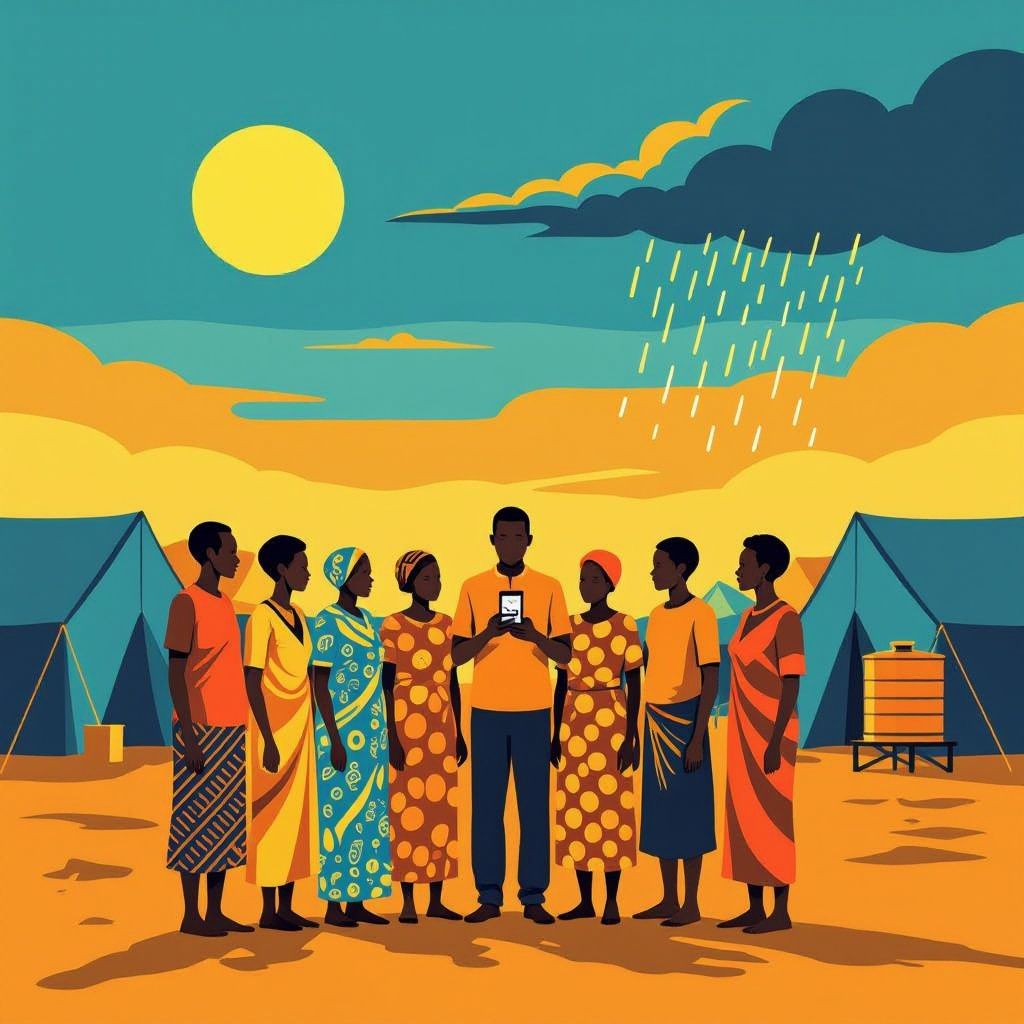
Kakuma, 12 June 2026
NOAA confirmed El Niño’s arrival on 11 June 2026, with a 63% chance it becomes a rare ‘Super’ El Niño. For East Africa’s most vulnerable communities, prolonged drought and severe flooding loom — threatening food and water security.
A Climate Threshold Crossed
On 11 June 2026, the United States National Oceanic and Atmospheric Administration (NOAA) officially confirmed that El Niño has arrived, marked by the prolonged warming of sea surface temperatures in the central and eastern Pacific Ocean rising just above the critical 0.5°C threshold required to declare a weak El Niño event [1]. The declaration, while significant in itself, is not the headline that has alarmed climate scientists and humanitarian agencies alike. What forecasters are watching closely is whether this event will escalate dramatically — NOAA’s Climate Prediction Center has assigned a 63% probability that Pacific sea surface temperatures will rise more than 2°C above historical averages, the threshold that would officially classify it as a rare ‘Super’ El Niño [1][2]. If that threshold is breached, the world will be facing only the fourth such event since records began in 1950 [2][3].
History’s Warning: What ‘Super’ Really Means
To understand the stakes, it is worth examining what previous Super El Niño events have cost the world. Since the catastrophic 1877–1878 mega-event, only three subsequent events have exceeded the 2°C temperature anomaly threshold: the 1982–1983 event, the 1997–1998 event, and the 2015–2016 event [3]. The economic toll has been staggering. The 1982–1983 Super El Niño resulted in an estimated $4.1 trillion in global income losses, while the 1997–1998 event caused approximately $5.7 trillion in global losses [1]. That 1997–1998 event also killed an estimated 16% of the world’s coral reefs [3]. These are not abstract figures — they represent devastated harvests, collapsed fisheries, and humanitarian crises that rippled across multiple continents over the course of those years.
East Africa in the Crosshairs: Drought, Flood, and Food Insecurity
For communities in Turkana County — including the refugee settlements of Kakuma and Kalobeyei — the trajectory of this El Niño event is not a distant meteorological curiosity. It is an immediate humanitarian threat. NOAA forecasters project that between October 2026 and January 2027, areas near the Horn of Africa in East Africa are expected to experience severe flooding rains [2]. This pattern is consistent with the well-documented tendency of El Niño to deliver erratic and extreme precipitation across the Horn of Africa [GPT]. However, the broader East African picture is more complex and more dangerous. Drought conditions are simultaneously forecast to develop in parts of Southeast Africa during the Southern Hemisphere summer, spanning December 2026 to February 2027 [2]. For communities already living on the margins of food and water security, both extremes — too much water and too little — carry grave consequences.
What Comes Next: A Timeline of Risk
The coming months present a structured escalation of risk. As of 12 June 2026, the event is still in its early, weak phase — equatorial Pacific temperatures have only just crossed the 0.5°C threshold [1]. The critical window for intensification runs from now through late autumn 2026. NOAA forecasts a 66% chance that the event will be strong or very strong by winter 2026–2027, and forecasting firm Crucial projects an 85% chance of El Niño conditions and a 45% chance of a full Super El Niño between December 2026 and February 2027 [3]. The shift of the Pacific jet stream south of its usual path — spanning approximately 11,265 kilometres — is expected to suppress Caribbean and Atlantic hurricane activity while simultaneously causing severe droughts in the Caribbean, India, and Southeast Asia [1]. As of 10 June 2026, reduced monsoon precipitation was already beginning to be recorded in India and Southeast Asia, threatening to exacerbate summer heat extremes [2].