

Supreme Leader Khamenei Killed as US-Israel War with Iran Spreads Across Middle East
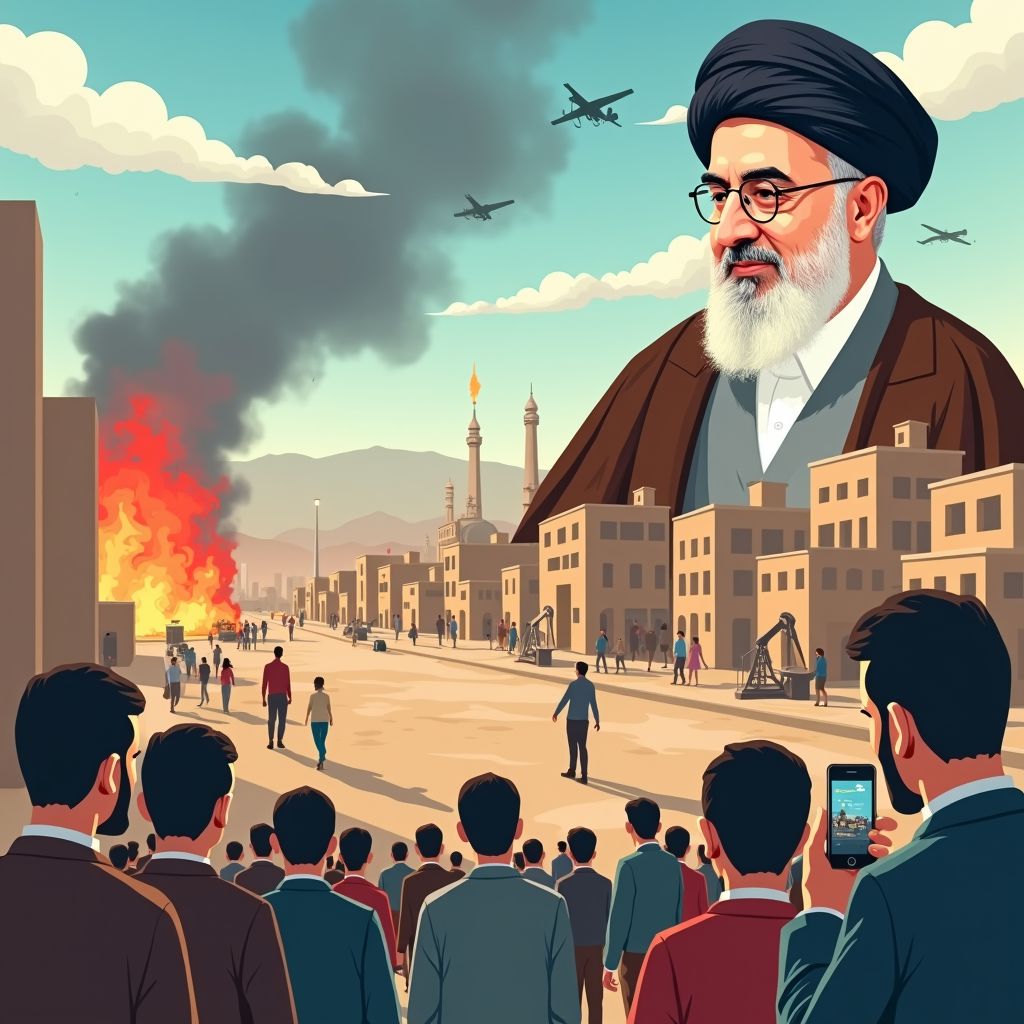
Tehran, 2 March 2026
Iran’s Supreme Leader Ali Khamenei died in joint US-Israeli strikes on Saturday, triggering regional warfare that has killed over 555 people across 130 Iranian cities and claimed four American service members’ lives. Iran retaliated by targeting Gulf states’ civilian infrastructure, oil facilities, and US bases, whilst Israel began bombing Lebanon after Hezbollah launched missiles. The conflict has disrupted global energy markets with oil prices surging 9% and European gas prices rocketing 45%, as Trump considers deploying ground troops and refuses to rule out boots on the ground operations.
Iran’s Devastating Retaliation Spreads Across Gulf States
Following the death of Supreme Leader Ali Khamenei in Saturday’s strikes, detailed in our previous coverage [https://kakuma.bytes.news/3819185-Iran-Middle-East/], Iran’s military response has escalated dramatically across the Gulf region on Monday. Iranian forces launched coordinated strikes targeting civilian infrastructure in multiple US-allied nations, with the UAE bearing the brunt of the assault as Iran fired 165 ballistic missiles, two cruise missiles, and 541 drones [1]. The attacks killed three migrant workers when 21 drones struck civilian targets in the Emirates [1], whilst Qatar faced an intensive bombardment of 44 missiles and eight drones [1]. Kuwait’s strategic Ali al-Salem Air Base came under ballistic missile attack, though Kuwaiti air defence systems successfully intercepted 97 missiles and 283 drones, resulting in one death and over 30 injuries [1]. The scale of Iran’s retaliation demonstrates the regime’s determination to strike back despite the decapitation of its leadership structure.
Energy Markets in Turmoil as Strategic Infrastructure Targeted
The conflict’s economic ramifications became starkly apparent as Iran targeted critical energy infrastructure across the Gulf on Monday. Saudi Arabia’s Ras Tanura oil refinery, with a capacity of 550,000 barrels per day, was partially shut down after being struck by two drones [2]. The attack on this vital facility contributed to oil prices surging 9% [2], whilst the broader disruption to shipping in the Strait of Hormuz has sent shockwaves through global energy markets. European natural gas prices experienced an extraordinary surge of 45% [2], with QatarEnergy halting liquefied natural gas production due to military attacks on its facilities [2]. This production halt caused natural gas futures in Europe to surge over 40%, whilst US natural gas prices increased by approximately 5.2% [2]. The targeting of energy infrastructure reflects Iran’s strategic calculation to inflict maximum economic pain on Western economies and Gulf allies supporting the US-Israeli operation.
American Military Casualties Mount as Operations Expand
The human cost for American forces became clearer on Monday as Defence Secretary Pete Hegseth and General Dan Caine confirmed that four US service members have been killed in the escalating conflict [2]. Three service members were initially reported killed in Kuwait with five others seriously injured during Operation Epic Fury [2], before a fourth service member died from injuries sustained in the Iran strikes [2]. General Caine warned that US forces expect to take additional losses whilst working to minimise casualties [2]. The Pentagon revealed that three US F-15D Strike Eagle jets were mistakenly shot down by Kuwaiti air defence systems during the operation, though all six aircrew ejected safely [2]. President Trump, addressing the mounting casualties, stated he would not rule out deploying ground troops into Iran, telling the New York Post: ‘I don’t have the yips with respect to boots on the ground — like every president says, “There will be no boots on the ground.” I don’t say it’ [2].
Regional War Engulfs Lebanon as Israel Strikes Hezbollah
The conflict expanded beyond Iran on Monday as Israel launched large-scale strikes against Hezbollah targets throughout Lebanon after the group fired missiles into Israeli territory [1][2]. The Israeli Defence Forces announced they had begun striking ‘terror targets’ across Lebanon, with at least 31 Lebanese killed and 149 wounded in the retaliatory strikes [1]. Israeli Defence Minister Israel Katz escalated the rhetoric significantly, declaring Hezbollah Secretary-General Naim Qassem ‘a marked target for elimination’ and warning that ‘whoever follows the path of Khamenei will soon find himself alongside him in the depths of hell’ [2]. The violence has already reached Cyprus, where an Iranian drone struck Britain’s Akrotiri airbase [1], demonstrating how the conflict is drawing in additional regional actors. Lebanese Prime Minister Nawaf Salam announced a ban on all security and military activities by Iran-backed Hezbollah [2], though this appears to have had little immediate effect on the group’s operations. Residents of Beirut told NBC News they are ‘sick and tired of war’, with one woman stating: ‘We are tired of going from home to home, we are tired of war, the economy is bad and can’t afford anything’ [2].