

Kakuma Refugee Camp Faces Severe Water Crisis as Prices Triple
Kakuma, 13 May 2026
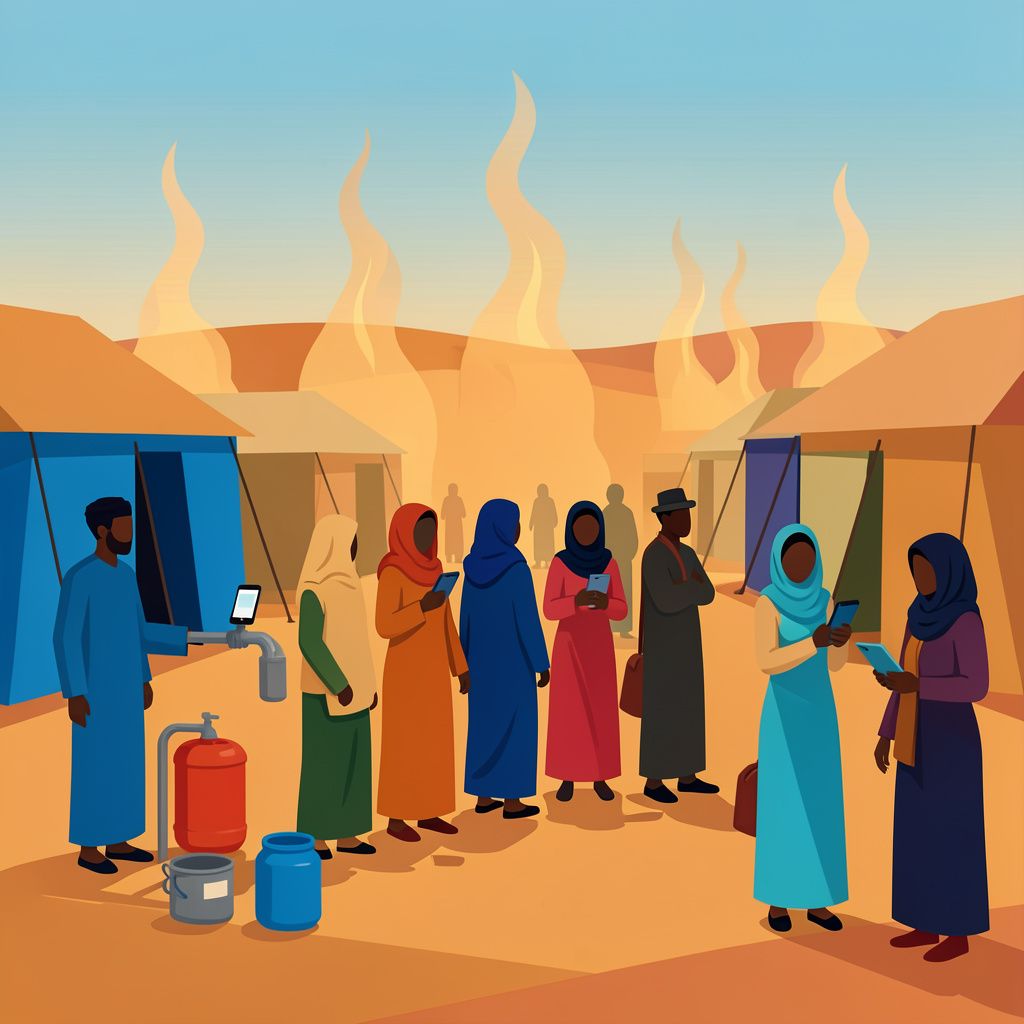
A three-month water shortage has forced Kakuma refugees to purchase water from vendors at KSh 50 per 20-litre container, triple the previous price of KSh 20. With temperatures exceeding 35°C and dry water nozzles throughout the camp, community leaders warn that daily violence at water points could escalate into broader communal conflict if immediate intervention doesn’t occur.
Water Rationing System Collapses Amid Infrastructure Failures
The water crisis began in July 2021, disrupting a previously established rationing system that provided water twice daily between 7:00 am-9:00 am and 12:00 noon-2:00 pm [1]. Zerihun Lemma, a 65-year-old community leader in Kakuma 3, confirmed that “before the crisis, water was rationed two times per day for almost all communities” during these specific timeframes [1]. The National Drought Management Authority had forecasted in July 2021 that “dispersed rainfall with temporal distribution of 1-2 days was experienced in some sections of Turkana West,” indicating the meteorological conditions contributing to the shortage [1].
Extreme Heat Compounds Water Access Challenges
The water shortage coincides with extreme temperatures that can exceed 35 degrees Celsius, reaching up to 38 degrees Celsius during January, February, and March [1]. These conditions occur during Kakuma’s dry season, which runs from July through September, precisely when the current water crisis has emerged [1]. The camp’s climate follows a pattern of short rainy seasons from November to December and longer rainy seasons from mid-March to June, meaning refugees face months without adequate precipitation relief [1].
Tripling Water Costs Force Vulnerable Populations Into Hardship
Residents like Halima Aden from Kakuma 1, Zone 1, Block 5, report that “there has been a three-month water shortage, which is forcing us to buy from local vendors who sell at KSh 50 per 20-litre jerrycan” [1]. This represents a significant increase from the previous trader price of KSh 20 per 20-litre container for Ethiopian and Somali communities [1]. The price escalation of 150 percent has created severe financial strain on refugee households already struggling with limited resources [1].
Daily Violence Erupts at Water Distribution Points
Community leader Andersen from Kakuma 3 warns that “the violence is now a daily routine at water palaces in most places of Kakuma 3” as desperate residents compete for limited water supplies [1]. The combination of water shortages, rationing failures, and maintenance problems has created flashpoints throughout the camp where tensions regularly boil over [1]. Local water traders have also suffered economic devastation, with Regina, a water trader in Kakuma 1, losing her daily earnings of KSh 300-400 and being forced to sell personal valuables to survive [1].