

South Sudanese Models Dominate Global Fashion Yet Face Visa Barriers
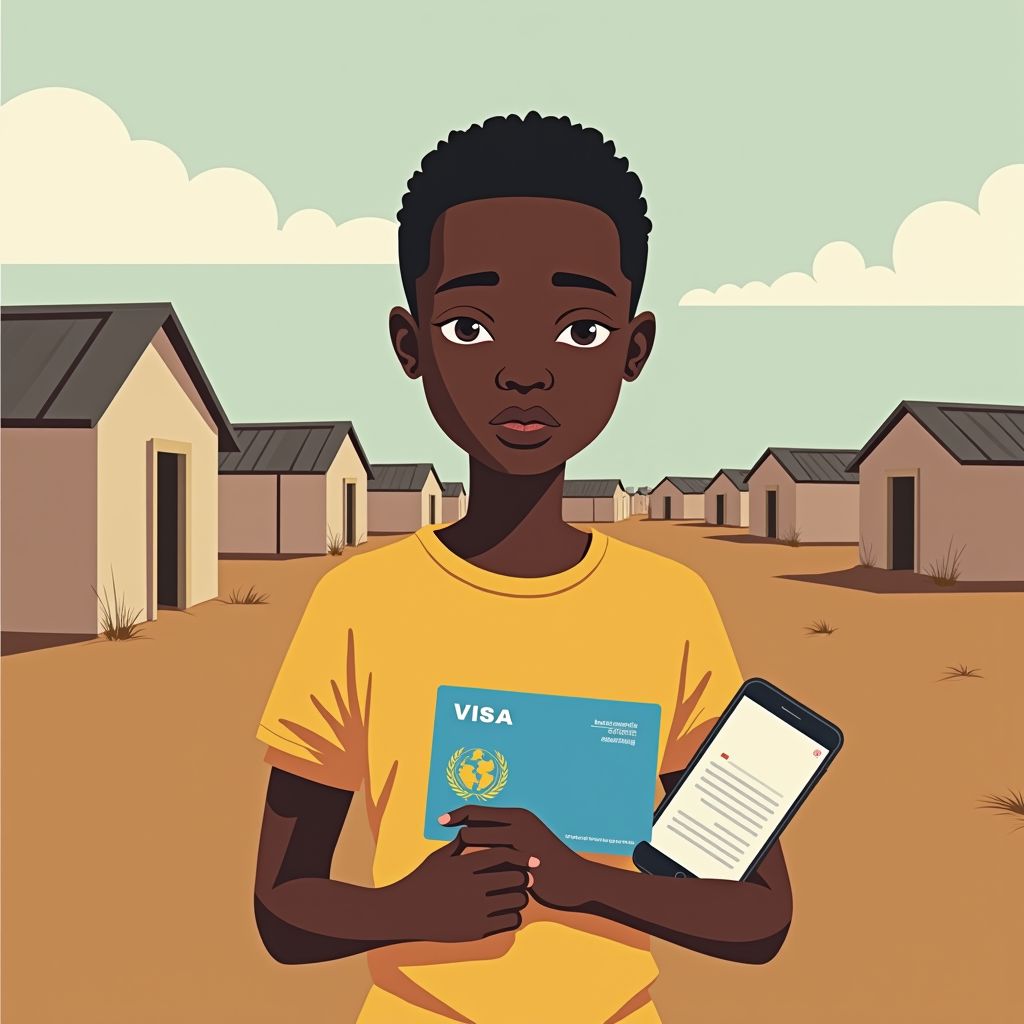
Kakuma, 13 March 2026
Despite South Sudan producing nine of the world’s top 50 models who dominate Paris, Milan and London runways, talented individuals like Bichar Hoah continue facing European visa rejections that block their international careers. Seven models from Juba-based agency Jubalicious were recently denied visas despite having work sponsors, forcing some to work as cleaners whilst missing opportunities at Milan Fashion Week. This paradox highlights how bureaucratic barriers prevent refugees from one of the world’s least developed countries—where 92% live below the poverty line—from accessing the very fashion capitals that actively seek their distinctive look and talent for major luxury brands.
Dreams Deferred: The Visa Rejection Crisis
The stark reality facing South Sudanese models became evident in March 2026 when Yar Agou, a 19-year-old talent signed with Jubalicious modelling agency, was rejected for a visa to work at Milan Fashion Week and found herself working as a cleaner in Juba [1]. Her story mirrors that of Bichar Hoah, the 24-year-old model raised in Kenya’s Kakuma refugee camp, who was recently denied a European visa despite her aspirations to represent South Sudan on international runways [1]. Doris Sukeji, founder of the Juba-based Jubalicious agency, revealed that seven models have been rejected for visas in recent months despite having legitimate work sponsors, a devastating blow for young people seeking to escape poverty through their natural talents [1].
Industry Recognition Versus Border Barriers
The irony is particularly striking given South Sudan’s remarkable dominance in global fashion circles. Currently, at least nine of the top 50 models listed on Models.com are from South Sudan [1], a testament to the country’s extraordinary contribution to an industry that actively seeks their distinctive features. ‘Paris, Milan, London – the fashion industry is dominated by South Sudanese boys and girls at the moment,’ explains Sukeji, whose agency provides free training for up to three months whilst taking a modest 10% cut from models’ earnings [1]. The success stories are compelling: Awar Odhiang, born in an Ethiopian refugee camp, closed the prestigious Chanel fashion show in Paris on 6 October 2025 [3], whilst Anyier Anei, who grew up in Kenya, has starred in the French film ‘Coutures’ and secured international modelling contracts [1][3].
Economic Reality Behind the Glamour
The models’ determination becomes even more remarkable when viewed against South Sudan’s challenging economic backdrop. With 92% of South Sudanese living under the poverty line [1], modelling represents one of the few pathways to economic advancement for young people in a country that gained independence from Sudan in 2011 after decades of conflict [3]. The nation endured a devastating civil war from 2013 to 2018 that claimed over 400,000 lives, making it one of the least developed countries globally [3]. For models like Yar Agou, who moved from Kenya to South Sudan to pursue her dreams, the financial stakes are immediate and pressing. ‘We have everything that all countries in the world desire. One day, really, South Sudan will change,’ she expressed optimistically despite her visa setbacks [3].
Perseverance Amid Systemic Challenges
The emotional toll of visa rejections weighs heavily on both models and their advocates. ‘You get heartbroken,’ admits Sukeji, who has witnessed talented individuals repeatedly denied opportunities despite legitimate work contracts [1]. Yet the models themselves display remarkable resilience. Bichar Hoah, despite his recent visa rejection, remains focused on his ultimate goal: ‘I want to represent South Sudan. For the world to see me. And also to say that these guys from South Sudan do good work’ [3]. This sentiment echoes the philosophy of established model Anyier Anei, who was in Paris as recently as 9 February 2026: ‘Failure is less frightening than having dreams you never try to achieve. Even with fear, you have to take that risk’ [1][3]. The Jubalicious agency continues its mission, collaborating with New York agency 28Models to place talent in Europe, training sessions for aspiring models took place on 19 and 20 February 2026, with strict height requirements of 1.83-1.91 metres for male models and 1.75-1.80 metres for females [3]. Sukeji acknowledges the industry’s preference for their distinctive features: ‘Mostly it’s the skin colour. That is how most of the South Sudanese get signed. They are looking for very dark models’ [1].